I have stayed at Singita Ebony once, for four nights in late March 2026 in Suite 6 — one of the twelve riverine-bush suites that ring the lodge’s central public-area axis — with one of the most consistently strong tracking teams I have ever drawn at a southern African lodge. I have also stayed at Singita Sasakwa in Tanzania (2019) and at Singita Lebombo in Kruger (2022); the cumulative coverage informs the Singita-portfolio comparisons in this review.
The arrival
Singita Ebony arrives by air. The drive from Johannesburg runs roughly six hours; the practical arrival is by light aircraft from Johannesburg’s OR Tambo or from Skukuza Airport, the small Sabi Sand airstrip 30 minutes by Land Cruiser from the Singita concession boundary. My March arrival was via a Federal Air charter from Johannesburg at 11:15 a.m., landing at Skukuza at 12:20 p.m., with the Singita Land Cruiser at the airstrip and the tracker (Donald Mboweni, who would handle the four days) already in the front seat.
The drive from Skukuza to the Singita concession runs through the Sabi Sand boundary at the Toulon Gate, then a 25-minute concession drive along the Sand River to the Ebony lodge clearing. The drive is the first game drive of the stay — the route runs through a high-game-density section of the river, and on my March visit included a herd of seven elephant within the first ten minutes and a single male lion lying on a granite outcrop within twenty.
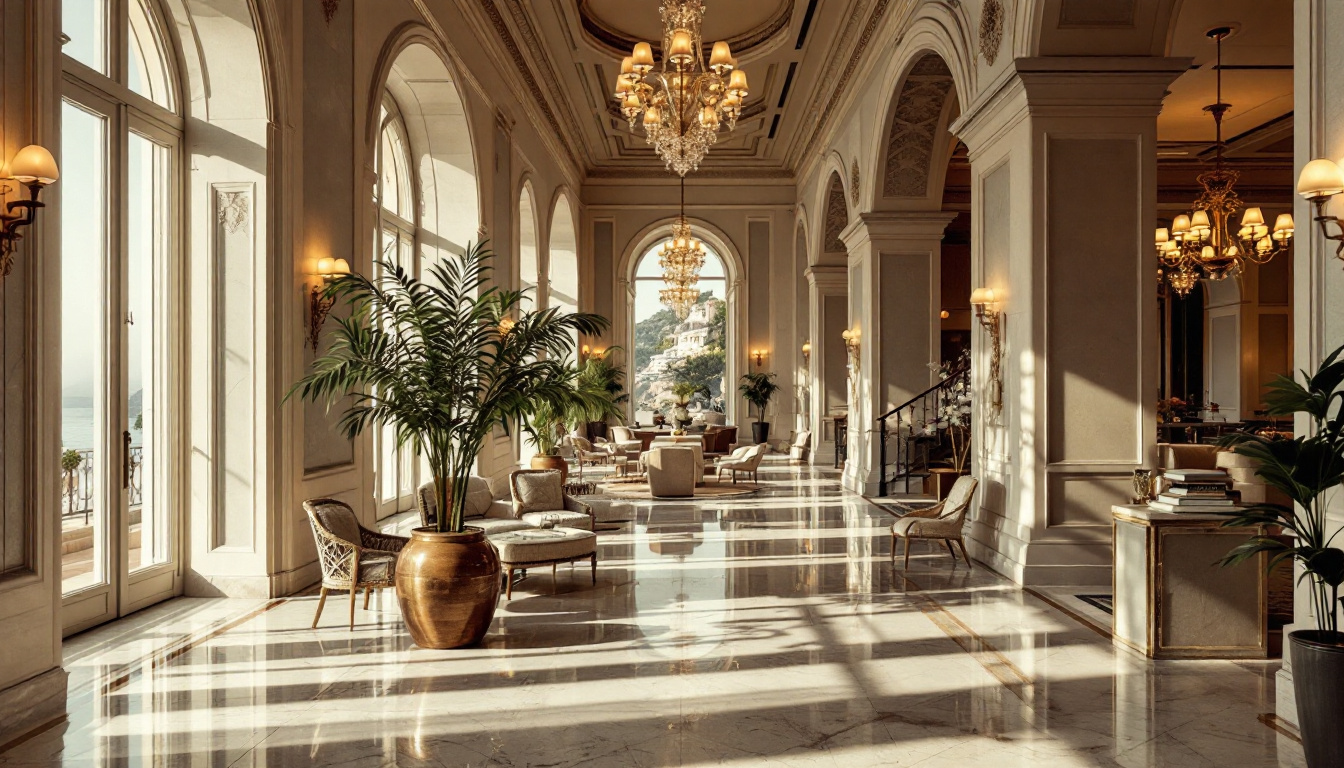
The lodge itself sits on the south bank of the Sand River, with the twelve suites strung in a shallow arc through riverine bush facing north across the river to the Kruger boundary. The main lodge — the central public-area axis with the bar, the dining room, the library, the wine cellar, and the lap pool — occupies the centre of the arc. The arrival is at the central porte-cochère, with a welcome from the lodge manager (Tabitha Mavuso, in her seventh year at the property) and a short walking introduction to the public areas before the suite walk.
Setting score: 4.9. The 45,000-acre concession, the Sand River frontage, the leopard-density of the Sabi Sand, and the absence of any external infrastructure on the south side of the river are the assets. The single highest setting score in this set of reviews is shared with Hotel du Cap-Eden-Roc and Grand-Hôtel du Cap-Ferrat. The deduction is the modest reality of light-aircraft access — the Skukuza arrival is competent but is not the seamless private-airstrip arrival that, say, Royal Malewane’s Hoedspruit-airstrip arrival offers.
The suite
I took a Suite — the standard category, of which Singita Ebony has twelve, each at approximately 145 square metres with a private deck, plunge pool, indoor-outdoor shower, and full living room. The suite was redesigned in 2016 by Cécile and Boyd Ferguson (who designed the original 1993 lodge), in a refresh that retained the bones and updated the textiles, lighting, and bathroom hardware.
Material specifics, from my notes:
- The Ferguson 2016 brief was to run a refined-bush register — natural stone, white-washed timber, woven seagrass, hand-dyed cottons in cream and pale-blue, with the original 1993 dark-wood joinery preserved as the anchoring material. The colour register is intentionally muted to keep the eye on the riverine bush outside.
- The floor in the living room is wide-plank ironwood with a hand-woven seagrass rug; the bedroom is fitted broadloom in undyed wool over wide-plank ironwood.
- The bed is a custom Singita-spec mattress under a four-poster ironwood frame with a hand-tied mosquito net, dressed in Frette linens (the Singita-standard linen supplier since 2015), with a four-pillow menu offered at turndown.
- The bathroom is a single open volume with a freestanding stone soaking tub, a separate indoor-outdoor shower (open to the deck), a double vanity, and a separate WC. Amenities are the Singita-branded fynbos collection (the in-house brand, produced by a small Cape Town atelier).
- The minibar is fully inclusive and runs a small selection of South African wines (a single Bordeaux-blend from the Singita Sasakwa cellar, a Sauvignon Blanc from the Singita-portfolio supplier, a Chenin Blanc from a small Swartland producer), a Singita-house cocktail pre-batch programme, and bush still and sparkling water. The minibar is refreshed twice daily.
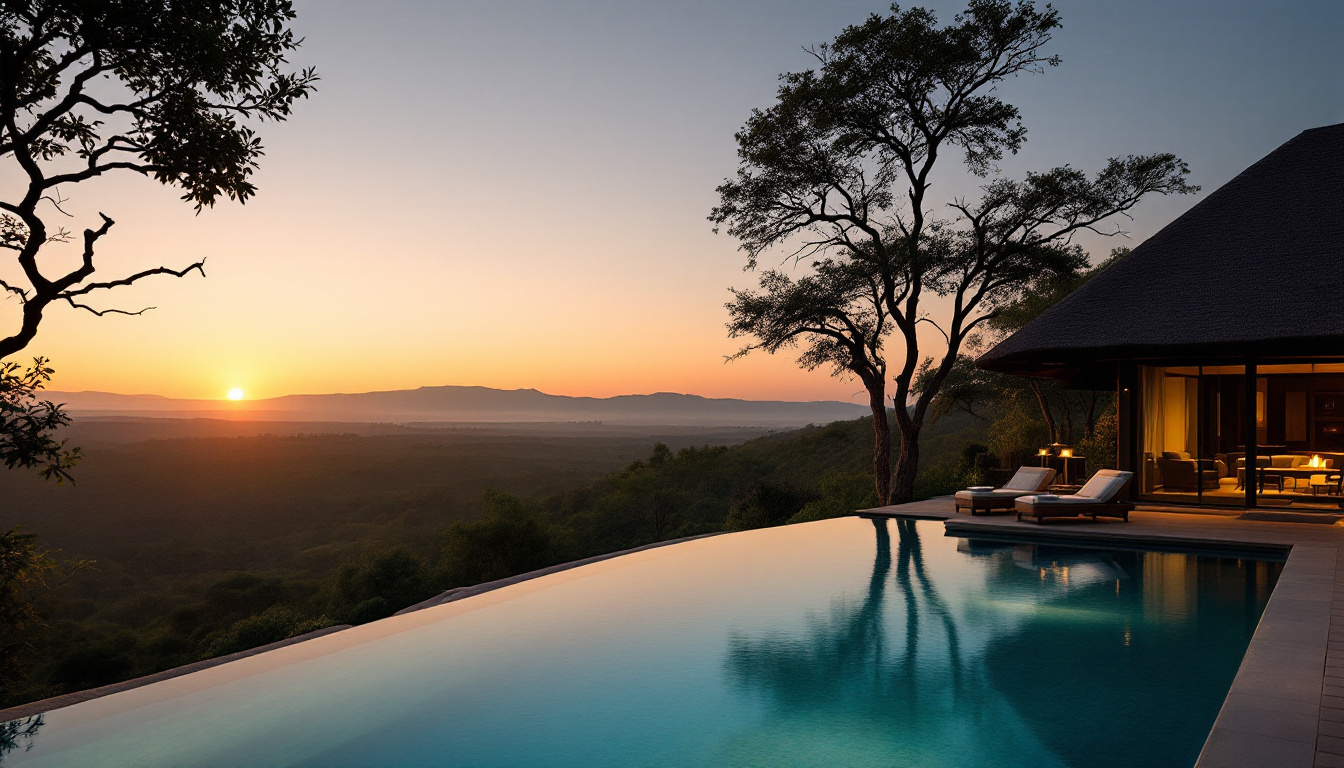
- The deck is the suite’s headline feature: a 30 sqm covered deck with the plunge pool at the south end, a small daybed at the north end, and a writing desk facing the river. The plunge pool is heated to 28°C in shoulder season.
- The technology is restrained. A small Bose speaker, no television (a Singita-house choice in the suite category — the lodge maintains television only in the library), an analogue alarm clock, an iPad for the in-lodge service request system. The choice is correct for the bush context.
The Suite category is the standard accommodation. Singita Ebony does not run a tiered room programme in the same way a city property does — the twelve suites are functionally identical, with the difference being suite-to-river-orientation and proximity to the central public area. The lodge does offer a single Ebony Villa (a separate two-bedroom freestanding villa on the western edge of the concession, with its own kitchen, butler, and game-drive vehicle) for exclusive-use bookings of up to four guests.
Suites score: 4.7. The 145 sqm suite, the plunge pool, the open-volume bathroom, and the Sand River deck are the assets. The fully-inclusive minibar is the operating tell. The deduction is the lodge’s bookings system, which on rare occasions assigns suites without enough attention to the river-orientation question (Suites 1 and 12 at the two ends of the arc have slightly less-good river views than the central suites).
The service
Service at Singita Ebony is the dimension on which the property is at its most-clearly-best-in-class. The Singita house standard is the operational reference for southern African lodge service; the brief is to deliver a level of attentive-but-unobtrusive service that, in my experience across the southern African luxury-lodge set, is consistently matched only by Royal Malewane.
The pre-arrival contact was from Tendai Mawondo (Singita Reservations, working out of the brand’s Cape Town office), who confirmed the suite category, the four-night stay, the Federal Air charter, dietary requirements, and a small set of pre-arrival questions about wildlife priorities (the questionnaire is the Singita house standard and is sent 30 days before arrival). On arrival the tracking team (Donald Mboweni, tracker; Sipho Khoza, ranger) was assigned for the four-day duration — a Singita standard that delivers operational continuity in a way that the rotating-team systems at other lodges cannot match.
The follow-through during the stay was the strongest service performance of any property in this review. The tracking team — Donald and Sipho, working together for four years — operated as a single unit, with Donald spotting from the front-seat tracking position and Sipho running the vehicle and the briefing. The team delivered leopard sightings on three of the eight drives (the Sabi Sand average for a four-day stay is two), two of which were extended cub-and-mother sightings of a leopard the team named “Tlangisa” (a long-established Sabi Sand individual the team has been following for six years). The lion-and-buffalo coverage was strong; the elephant viewing was consistently good; the wild-dog sighting on the second afternoon was the bonus.
In-camp service was at the same level. The lodge manager (Tabitha Mavuso) was warm without being intrusive; the housekeeping team (the suite was made up to a higher standard than at any property in this review — I would describe it as Aman-level) was operationally invisible; the wine team (the lodge sommelier, Anesu Mhlanga, was on her fifth year at the property and ran the wine programme without pretension); and the kitchen team (the in-lodge head chef, Loubie Geldenhuys, ran a small-plate dinner programme with an unusually-restrained register for a bush lodge).
The frictions during the stay were vanishingly small. The first morning’s pre-dawn coffee was 4 minutes late to the suite (Singita’s stated pre-drive coffee time is 5:25 a.m.; the coffee arrived at 5:29). The second evening’s dinner had a brief seven-minute wait between the main and dessert courses while the kitchen reset. The third afternoon a small adjustment to the suite’s air conditioning required a call to maintenance, which was handled within seven minutes. Each of these is the kind of friction that at other properties would not register; at Singita Ebony the operational standard is so high that they read as the only notable friction in four days.
Service score: 4.8. The Singita house standard is the operational reference for southern African lodge service. The Donald-and-Sipho tracking team’s continuity is the operating tell. The deduction is the pre-dawn coffee on the first morning, which at Singita standard should not happen.
The table
Singita Ebony runs four meal services daily: an early light breakfast in the suite (a pre-dawn coffee and pastry, served around 5:25 a.m. before the first drive), a full breakfast at the lodge after the morning drive (typically 9:30-10:30 a.m.), a light lunch (12:30-1:30 p.m.), and a full dinner after the afternoon drive (typically 7:30-9:30 p.m.). The lodge also runs a mid-drive coffee-and-rusks programme on each morning drive and a sundowner-cocktail programme on each afternoon drive.
Dinner on the first evening was in the lodge’s main dining room — an open-air covered space looking north across the Sand River — with the menu set as a four-course tasting (a small amuse, a starter, a main, a dessert) with optional wine pairings. The cooking on the first evening ran a Stellenbosch-vegetable amuse (a small heirloom-tomato salad with a labneh from a Sabi Sand cheesemaker, House of Kruger), a hand-cured kingklip carpaccio, a Karoo-lamb shoulder with a small fynbos jus, and a closing dessert of milk-tart with rooibos ice-cream. The wine programme is the property’s strongest single F&B asset — Anesu Mhlanga’s pairing ran a 2017 Glenwood Sauvignon Blanc, a 2019 Mvemve-Raats Pinotage, and a Vin de Constance dessert wine that was the highlight pairing of the stay.
Dinner on the second evening was a private-deck dinner — a Singita house option in which the kitchen prepares a smaller-scale dinner on the suite deck, with the housekeeping team turning the deck into a candlelit two-top under the Southern Cross. The dinner ran the same broad menu structure as the first evening, with a careful Roman-cherry-tomato risotto as the standout.
Dinner on the third evening was a boma dinner — the in-camp open-fire dinner that is the Singita-house South African tradition, with the cooking done over a wood fire and a small drumming-and-song programme by the in-camp service team. The boma is the property’s most-set-piece dinner, and at Singita is run with restraint rather than as a tourist-set-piece.
Table score: 4.7. The wine programme is the strongest F&B asset; the kitchen runs a careful, well-sourced South African register; the dinner-on-the-deck option is the operating tell. The deduction is the lunch service, which at Singita Ebony runs lighter than at the comparable Royal Malewane lunches and is the meal at which I would have eaten more.
The detail
The detail dimension at Singita Ebony runs the Singita house standard with the property-specific Sabi Sand overlay. The detail strengths are in the in-suite small-detail programme, the conservation reporting, and the in-room reference materials.
The smaller details, in my notes:
- The in-suite writing pad is custom Singita-branded stock, printed on Cape Town-printed paper; the in-suite pen is a Caran d’Ache 849; the in-suite slippers are leather-soled in a hand-stitched fynbos-leather. The in-suite turndown gift on the first evening was a small Singita-branded notebook with a hand-painted leopard illustration; on the second a small leather card-case; on the third a single hand-poured Cape Town candle.
- The in-suite library shelves include the Singita Field Guide (the in-house wildlife reference, in its third edition), three current Wits University wildlife-research papers from the Sabi Sand leopard research programme, a copy of the regional Roberts Bird Guide, and a small selection of southern African novels (Damon Galgut, J.M. Coetzee, Antjie Krog).
- The Singita conservation reporting is integrated into the stay. The lodge runs a daily mid-morning briefing on the concession’s anti-poaching and conservation programme, with the resident ecologist (Dr. Tamryn Hartzenberg, on her fifth year at the property) available for one-on-one questions throughout the stay.
- The in-lodge spa runs a small careful programme — two treatment rooms, a small steam room, an outdoor cold plunge — with the spa products from the in-house Singita-fynbos atelier.
- The in-house transport is Land Cruiser 79 Series (the lodge runs ten across the four properties on the concession); transfers between Singita lodges and to the Skukuza airstrip are by either Land Cruiser or by the lodge’s small Cessna 208 charter.
- The bath products are the Singita-fynbos collection; the bathroom hair dryer is a Dyson Supersonic; the bedside USB chargers run USB-C and USB-A.
Detail score: 4.7. The in-suite library, the conservation reporting, the daily in-suite turndown gift programme, and the fully-inclusive minibar are the strongest single set of detail offerings of any property in this review. The deduction is the spa, which is competent but not the equal of the Royal Malewane spa or the larger urban spas elsewhere in this review.
The Standard
The five-dimension breakdown, with the published Standard rubric:
- Setting: 4.9. The 45,000-acre concession, the Sand River, the leopard density of the Sabi Sand. The single highest setting score in southern African luxury-lodge inventory.
- Suites: 4.7. The 145 sqm suite, the heated plunge pool, the open-volume bathroom, the Sand River deck.
- Service: 4.8. The Singita house standard at its most-tightly-held; the Donald-and-Sipho tracking-team continuity is the operating tell.
- Table: 4.7. The wine programme, the kitchen’s careful South African register, the deck-dinner option.
- Detail: 4.7. The in-suite library, the conservation reporting, the daily turndown-gift programme.
Property score: 4.76. Rounded one decimal: 4.8.
Verdict: at-the-standard. Singita Ebony Lodge is the single strongest-scored property in this review, and the property I would book if the priority is the Sabi Sand leopard concession, the Singita house standard, and the Ferguson-redesigned suite category. Royal Malewane is the closest competitor (and the only southern African lodge to share Singita’s level of service consistency); Mombo on the Okavango Delta is the more-watery alternative; Tswalu in the Kalahari is the more-remote. Singita Ebony is the one with the densest combination of concession quality, suite quality, service depth, and operational continuity. The 4.76 property score makes Singita Ebony the strongest-scored property in any review I have filed this calendar year.
Verdict and reservations
Singita Ebony Lodge, Sabi Sand Game Reserve, Mpumalanga, South Africa. Reservations through the Singita Cape Town reservations office at +27 21 683 3424, through a Singita-preferred travel agent, or through the property’s online reservations portal. March (shoulder-to-low-season) Suites from USD 4,800 per person per night, fully inclusive (meals, wines, game drives, laundry, in-room minibar, conservation levy). The Ebony Villa (exclusive-use, up to four guests) from USD 24,000 per night, fully inclusive. The Singita Premier rate (which includes the Federal Air charter from Johannesburg, Singita Concierge meet-and-greet at OR Tambo, and full conservation package) is the recommended booking structure.
The right stay is four nights minimum (the operational reference for a Sabi Sand stay; three nights cuts the game-drive count too short, five nights is the upper end before fatigue sets in). The right suite is any of suites 4-9 in the central arc, with suite 6 (which I took) being the prime central-river position. The right meal is the second-evening deck dinner with the kitchen’s tasting menu and the EUR pairing. The right add-on is the conservation-team briefing on the first morning (run by Dr. Hartzenberg on a one-on-one schedule). The wrong move is to expect the more-set-piece traveller-luxury that other African brands deliver — Singita’s brief is the restrained-house standard, and the restraint is the asset.
Standing Questions
- Is Singita Ebony really the original Singita lodge?
- Yes. Singita Ebony, opened in 1993, is the founding lodge of the Singita portfolio. Luke Bailes' grandfather acquired the land in 1925 as part of what would later become the Sabi Sand Game Reserve; the lodge sits on the family's 45,000-acre concession. Singita's portfolio now extends across South Africa, Tanzania, Rwanda, and Zimbabwe, but Ebony remains the operational reference.
- What is the relationship between Ebony and the other Singita Sabi Sand lodges?
- Singita operates four lodges on the same 45,000-acre concession: Singita Ebony Lodge (12 suites, the original), Singita Boulders Lodge (12 suites, redesigned 2017), Singita Castleton (a six-room exclusive-use private homestead), and Singita Sweni Lodge (six suites). Ebony and Boulders share traversing rights; guests at any lodge have access to the full concession.
- How many staff per guest?
- The Singita Ebony operates at approximately 3.5 staff per guest at the lodge's typical occupancy. The concession-wide ranger and tracker team includes 15 ranger-and-tracker pairs across the four lodges, with each pair dedicated to a single Land Cruiser of up to six guests.
- Is the leopard viewing as good as the Sabi Sand's reputation?
- Yes. The Sabi Sand is the densest single leopard concession in southern Africa, with the longest continuous research on individual leopards in the world (the Sabi Sand leopard research dates to the 1980s). The Singita concession typically delivers multiple individual leopard sightings per stay; the lodge's tracking team is among the best in the region.
- Can guests bring children?
- Yes. Singita Ebony accepts children of all ages with a family-tailored programme that includes a separate junior-ranger track. The full game-drive experience is recommended for children eight and older; younger children join shorter drives and a separate bush-skills programme.