The Northwest Passage was, for most of the modern cruise era, the kind of destination that appeared only in the brochures of small-ship Arctic specialists like Hurtigruten and Quark Expeditions. The transit was operationally complex, ice-conditional, and commercially marginal at the scale most cruise operators worked at. The 2026 season is the inflection point. Six luxury-expedition operators are running confirmed Northwest Passage operations this summer; three of them are running multiple voyages; and the highest-positioned ship (Seabourn Venture) has been booking three years ahead at the upper-tier suite categories.
What follows is the operational shape of the 2026 season, the route as it actually runs, the operators by ship and itinerary, and the pricing reality.
The route
The Northwest Passage is the historic sea route through the Canadian Arctic Archipelago connecting the Atlantic and Pacific Oceans. The full transit is approximately 5,500 nautical miles from Nome, Alaska, to Halifax, Nova Scotia (or any of several alternative Atlantic exit ports). The typical commercial transit takes twenty-four to thirty-two days depending on ice routing and on the number of scheduled landings.
The route eastbound:
- Nome (Alaska) — embarkation, typical for Pacific-origin operators
- Bering Strait — crossing into the Chukchi Sea
- Beaufort Sea — eastbound transit
- Amundsen Gulf — entry to the Canadian Arctic Archipelago
- Northwest Passage proper — typically via Bellot Strait
- Lancaster Sound — into Baffin Bay
- Baffin Bay — eastbound to the Atlantic exit
- Atlantic exit via Halifax, St. John’s (Newfoundland), or Reykjavik
The historical alternative route via M’Clure Strait, further north, has been more variable since 2022 and is currently the less-reliable passage. Bellot Strait is the operational standard.
Cape Mercy and Bylot Island are common Canadian Arctic landings on the eastbound transit, with Pond Inlet (Mittimatalik), Devon Island and Beechey Island (the 1845 Franklin expedition wintering site) as key historical-and-natural landings. The route passes through Inuit communities at Cambridge Bay, Pond Inlet, and several smaller settlements where landing protocols are managed in coordination with Nunavut tourism authorities.
The operators by ship and itinerary
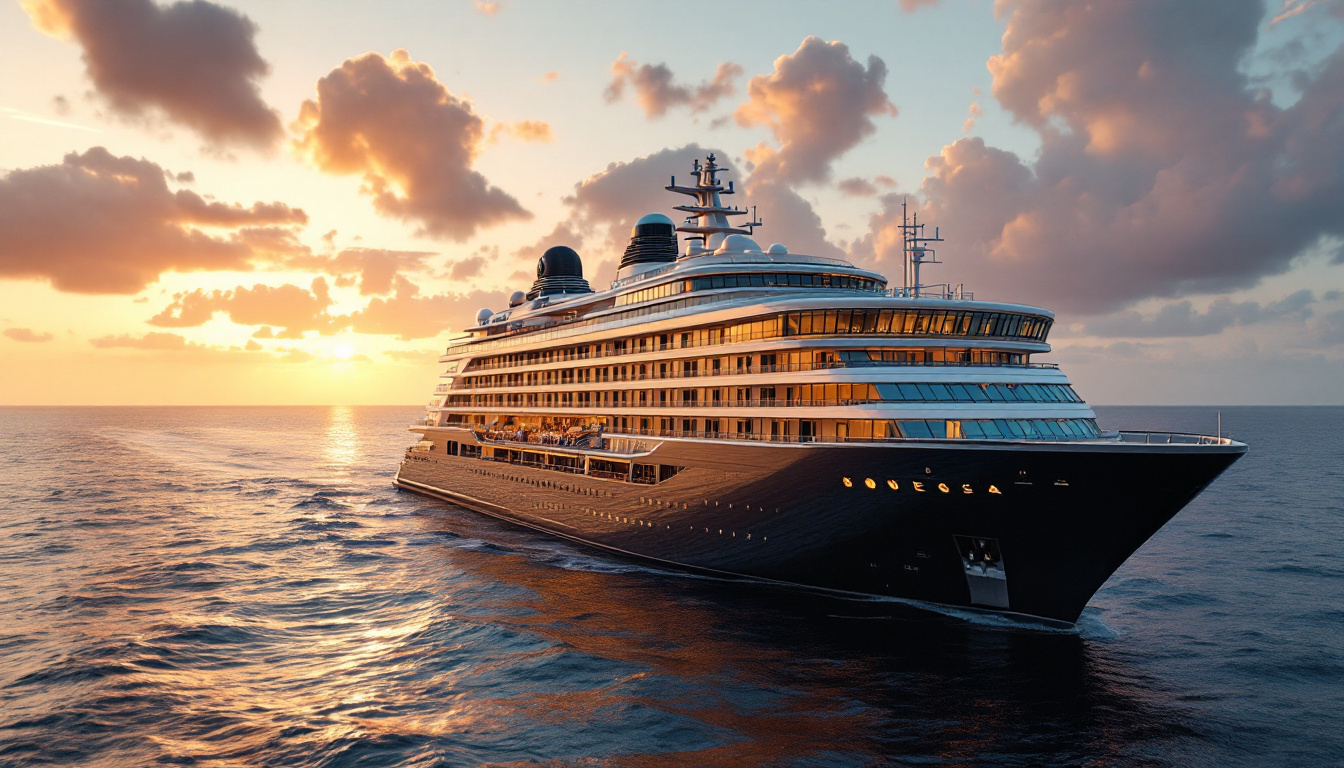
Seabourn Venture is the highest-positioned ship in the season and the one I would book if budget permits. Six voyages in 2026: three full transit attempts of twenty-four nights each, two Canadian Arctic deep-loops of fifteen to eighteen nights, and one shorter eight-night Greenland-and-Canadian-Arctic format. The expedition team of thirty for the full transits includes resident ice navigators, two Inuit cultural consultants, and a doctor-second on staff. Pricing: full transit USD 45,000 per person at booking last autumn, USD 52,000-58,000 per person on advisor resale.
Silversea Silver Endeavour runs two full transit attempts (28 August and 19 September departures) and three Canadian Arctic short formats. Silver Endeavour is the former Crystal Endeavor — a PC6-rated 200-guest luxury expedition hull that Silversea acquired from the Crystal bankruptcy in 2022. Pricing: full transit from approximately USD 52,000 per person, Canadian Arctic short formats from USD 22,000 per person.
Ponant Le Soléal runs two full transit attempts (early August and mid-September). Le Soléal is a smaller hull than the Silversea or Seabourn comparables (132 guests, PC6) but with the French expedition pedigree and the strong Ponant on-board product. Pricing: full transit from approximately EUR 36,000-38,000 per person.
Hurtigruten Expeditions runs the largest operational footprint — two ships (Roald Amundsen and Fridtjof Nansen) with multiple Canadian Arctic deployments through August and September. Hurtigruten’s pricing positions the line as the entry tier of the Northwest Passage market: Canadian Arctic short formats from USD 14,000 per person, full transits from approximately USD 28,000-35,000 per person. The ships are PC6, 530-guest vessels with a more contemporary-expedition (rather than luxury) on-board register.
Scenic Eclipse I runs one full transit in early September. The on-board product is the discovery-yacht luxury-expedition format with the helicopter-and-submarine hardware. Pricing: full transit from approximately AUD 67,000-72,000 per person.
Atlas Ocean Voyages World Navigator runs one full transit attempt in August. World Navigator is the smaller hull in the segment (196 guests, PC6) and the line is the value-tier option for guests who want full transit access at the lowest available luxury price point. Pricing: full transit from approximately USD 22,000 per person.
The operational difficulty
The Northwest Passage is genuinely more operationally complex than any other luxury-cruise itinerary. Three factors.
Ice routing. Despite the substantial decline in Arctic sea-ice extent over the past two decades, the Northwest Passage remains ice-conditional. The Bellot Strait passage is reliably navigable in the August-September window but the M’Clure Strait route further north remains variable. Each operator’s bridge team works with the Canadian Ice Service forecasts and with real-time satellite imagery to route the ship; the bridge typically reviews ice routing every six to twelve hours throughout the transit.
Communications. Above 70°N latitude, conventional satellite communications break down. Iridium remains the workable backbone; Starlink has improved coverage substantially since 2024 but coverage gaps remain in the higher latitudes. Each ship runs redundant communications systems including HF radio. Guest connectivity is restricted on most voyages above 75°N; the expectation is that connectivity is intermittent and Wi-Fi service is limited.
Medical. The nearest helicopter medical evacuation capability in the high Canadian Arctic is Yellowknife, which is hours from most transit positions. Each ship carries a doctor and, on the full-transit voyages, a doctor-second. Pre-cruise medical screening is more rigorous than for any other luxury-cruise destination; guests with cardiac conditions, mobility limitations, or recent surgery are advised against booking. Several operators decline to carry guests above certain age or BMI thresholds.
The pricing reality and the booking pace
The 2026 season’s pricing distribution shows the segment maturity:
- Entry tier (Hurtigruten Expeditions): USD 14,000-35,000 per person depending on itinerary length. Contemporary-expedition product, larger 530-guest hulls. Strong availability through booking
- Mid-tier (Atlas Ocean Voyages, Ponant Le Soléal): USD 22,000-38,000 per person. Smaller hulls (132-200 guests), more polished on-board product. Limited availability for August departures, good availability for September
- Upper tier (Scenic Eclipse, Silversea Silver Endeavour): USD 48,000-62,000 per person. 200-guest luxury-expedition hulls with full hardware (submarines on Scenic, expedition-team depth on Silversea). Limited availability; advisor resale at premiums of 8-15 percent over published rates
- Top tier (Seabourn Venture): USD 45,000-58,000 per person at booking, USD 52,000-58,000 per person on advisor resale. Sold out at all suite categories within ninety days of booking-window opening
The booking pace is the structural signal. Seabourn’s full-transit voyages sold out fifteen months in advance of departure. Silversea’s full transits sold out twelve months in advance. Ponant sold out within ninety days of booking-window opening. Hurtigruten retains some availability into the season due to larger hull capacity.
The 2027 booking window is the operative consideration for guests who missed 2026. Seabourn’s 2027 Northwest Passage voyages opened booking in March 2026 and were approximately 75 percent sold within sixty days at all suite categories. The advisor channel is the only reliable booking path for the upper-tier inventory.
What I am watching
Three items for the 2026 season. First, the routing decisions made by each operator during the transit window — Bellot Strait versus M’Clure Strait, and the timing of southbound versus northbound segments. Second, the new entrants, if any — the rumours about Aqua Expeditions and about a Lindblad-National Geographic upgrade entry have not yet materialised but the segment is attractive enough that further entrants are likely. Third, the political-environment risk around Russian Northeast Passage operations, which remain closed to Western operators since 2022 and which would, if reopened, redistribute polar-expedition demand between the two routes.
For the prospective guest in 2026 who can still find inventory: book the September Silversea Silver Endeavour transit if it appears in advisor inventory; book the Hurtigruten Roald Amundsen Canadian Arctic short formats if a more accessible-price entry is the goal. For the 2027 booking window: open conversations with travel advisors now for any of the upper-tier operators.
Standing Questions
- What is the Northwest Passage as a cruise itinerary?
- The historic sea route through the Canadian Arctic Archipelago connecting the Atlantic and Pacific Oceans. The first complete transit was Roald Amundsen's 1903-1906 voyage on Gjøa. Commercial transits became viable starting in the 2000s as Arctic sea-ice extent declined. The full transit runs Nome (Alaska) eastbound through the Bering Strait, Beaufort Sea, Amundsen Gulf, Northwest Passage proper (typically via Bellot Strait), Lancaster Sound, Baffin Bay, exits to Halifax. Approximately 5,500 nautical miles, twenty-four to thirty-two nights.
- Which operators are running the 2026 season?
- Six luxury-expedition lines confirmed full or partial Northwest Passage operations in 2026. Seabourn Venture: six voyages including three full transits. Silversea Silver Endeavour: two full transit attempts and three Canadian Arctic short formats. Ponant Le Soléal: two full transit attempts. Hurtigruten Expeditions: two ships (Roald Amundsen, Fridtjof Nansen) with multiple Canadian Arctic deployments. Scenic Eclipse I: one full transit. Atlas Ocean Voyages World Navigator: one full transit.
- What does it cost?
- The pricing range is wide. Hurtigruten Expeditions' Canadian Arctic short formats book from approximately USD 14,000 per person; full transits on Hurtigruten run approximately USD 28,000-35,000 per person. Atlas Ocean Voyages full transits price from approximately USD 22,000 per person. Ponant full transits from approximately USD 38,000 per person. Scenic Eclipse from approximately USD 48,000 per person. Silversea Silver Endeavour from approximately USD 52,000 per person. Seabourn Venture full transits sold at approximately USD 45,000 per person at booking; resale through advisors currently quoting USD 52,000-58,000 per person.
- What is the actual transit success rate?
- Modern commercial transit success rate is high but not 100 percent. Of the approximately twelve full luxury transits attempted in 2024, ten completed. The two that did not converted to Canadian Arctic deep-loop itineraries when ice conditions blocked the Bellot Strait passage. The 2025 season saw approximately fifteen attempts and fourteen completions. 2026 is on track to see the most full attempts in any single year.
- Why has the route become so commercially active?
- Three factors. Arctic sea-ice extent has declined to the point where the Bellot Strait passage is reliably navigable in August-September window. Luxury expedition fleet capacity has expanded substantially since 2020 (Seabourn Pursuit/Venture, Silversea Endeavour, Scenic Eclipse II all delivered 2022-23). And the cultural premium for unique itineraries has compressed the available booking window for the most polar-positioning ships.