I sailed Silver Ray for nine nights out of Civitavecchia in October 2025 and have been studying Silver Nova’s deployment patterns since her August 2023 debut. By the time both ships completed their first full year of service, two things were clear: the horizontal-design thesis works for some guests and confuses others, and the operational case for LNG-capable luxury hulls is now settled in a way it was not when Silversea announced the class in 2018.
What follows is the state of the Nova class as it sits at the midpoint of 2026, with the order book, the deployment patterns, and the things the brand has not yet figured out.
The two ships in service
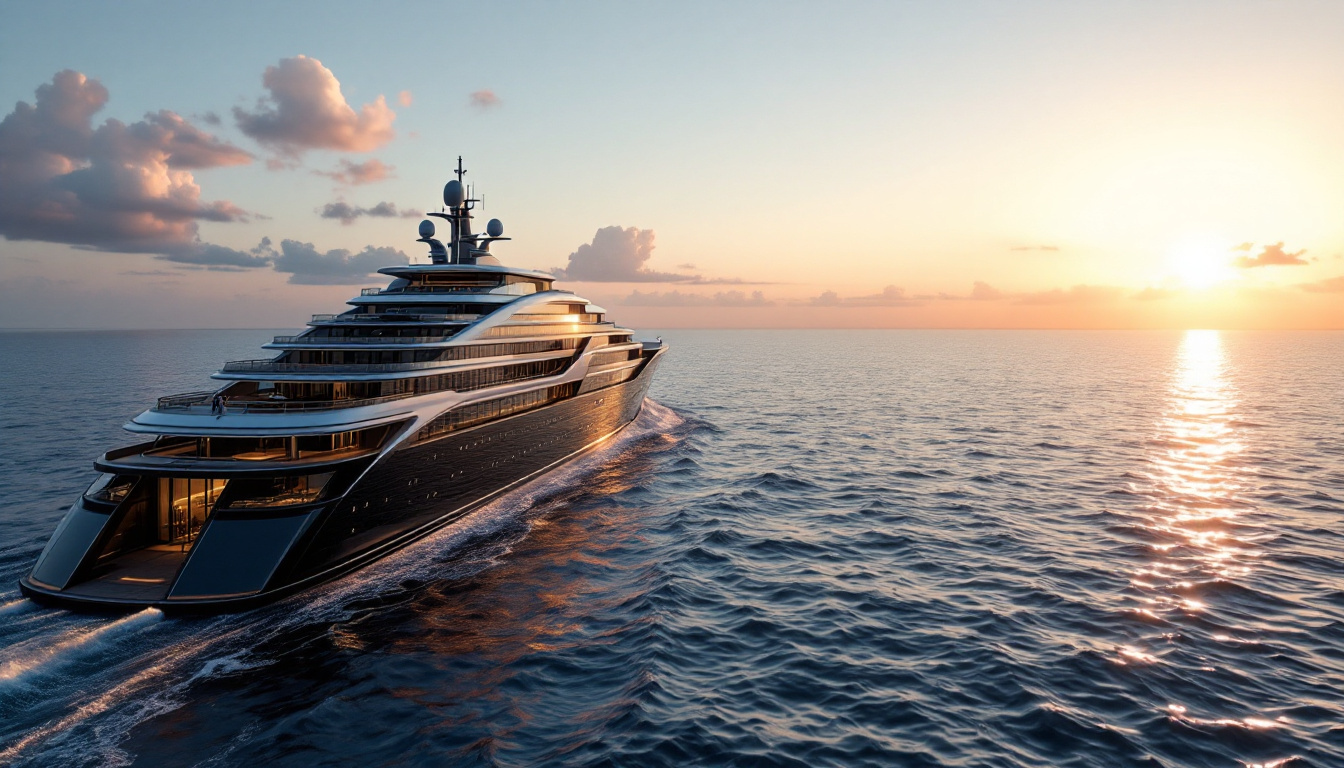
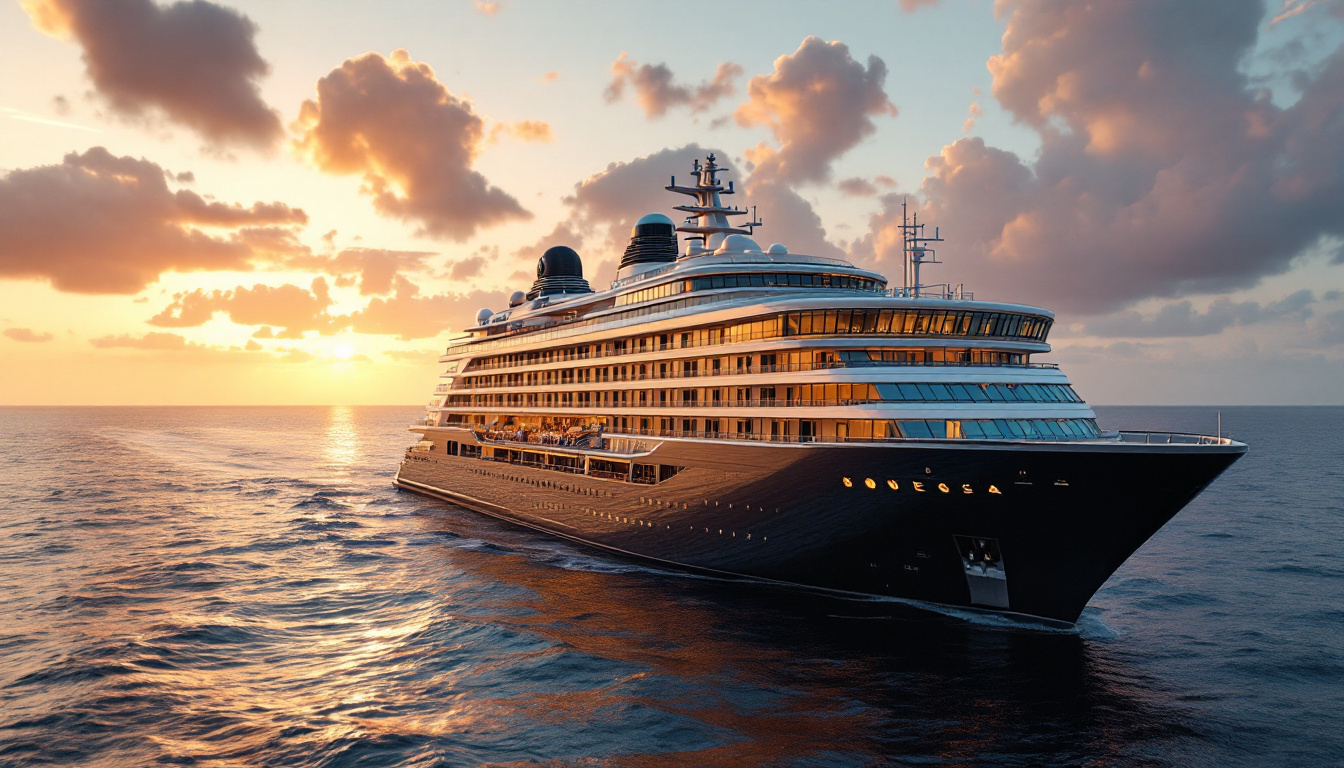
Silver Nova delivered from Meyer Werft Papenburg in July 2023, with a christening in San Francisco on 14 January 2024 that doubled as her Alaska season opener. Specifications: 54,700 GT, 244 metres LOA, 728 guests in 364 suites, dual-fuel LNG/MGO propulsion with battery-hybrid auxiliary capability. She has spent 2024-25 alternating between Caribbean winters and Alaska summers, with one Pacific repositioning per year. Her 2026 deployment moves her into the Mediterranean for the summer — the first time the class has had both hulls in the same basin simultaneously, which has forced some itinerary differentiation that I will come back to.
Silver Ray delivered from the same yard in June 2024 and entered service on 14 June 2024 with a maiden out of Lisbon. She is structurally identical to Nova with two refinements: the spa layout on deck 10 was reworked to add a thermal suite the original Nova lacks (a retrofit since added to Nova during her January 2026 dry-dock at Marseille), and the S.A.L.T. Lab kitchen on Ray is roughly fifteen percent larger to accommodate the class-formats that have proven popular on the older hull. Ray has been a Mediterranean-and-Caribbean ship since delivery, rotating to Northern Europe for the summer 2025 fjords season and returning to the Mediterranean for 2026.
What “horizontal design” actually means
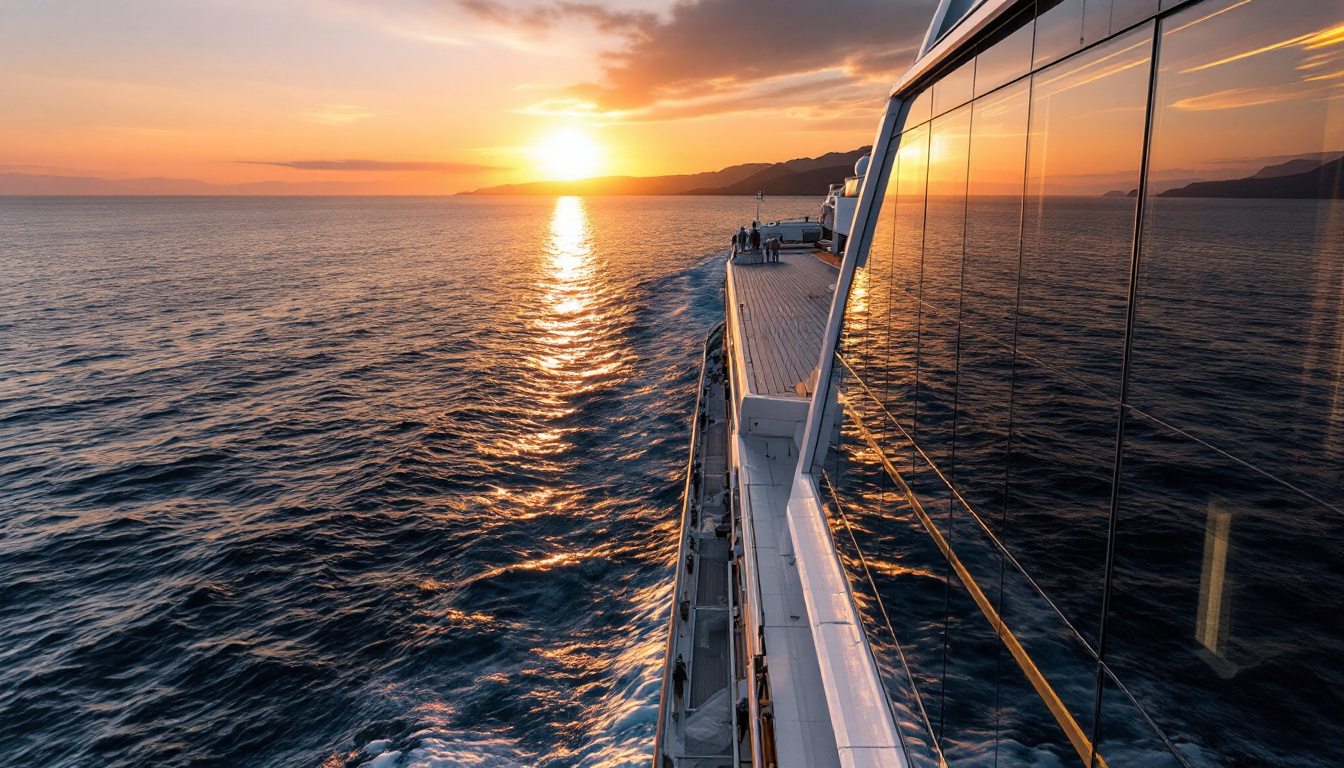
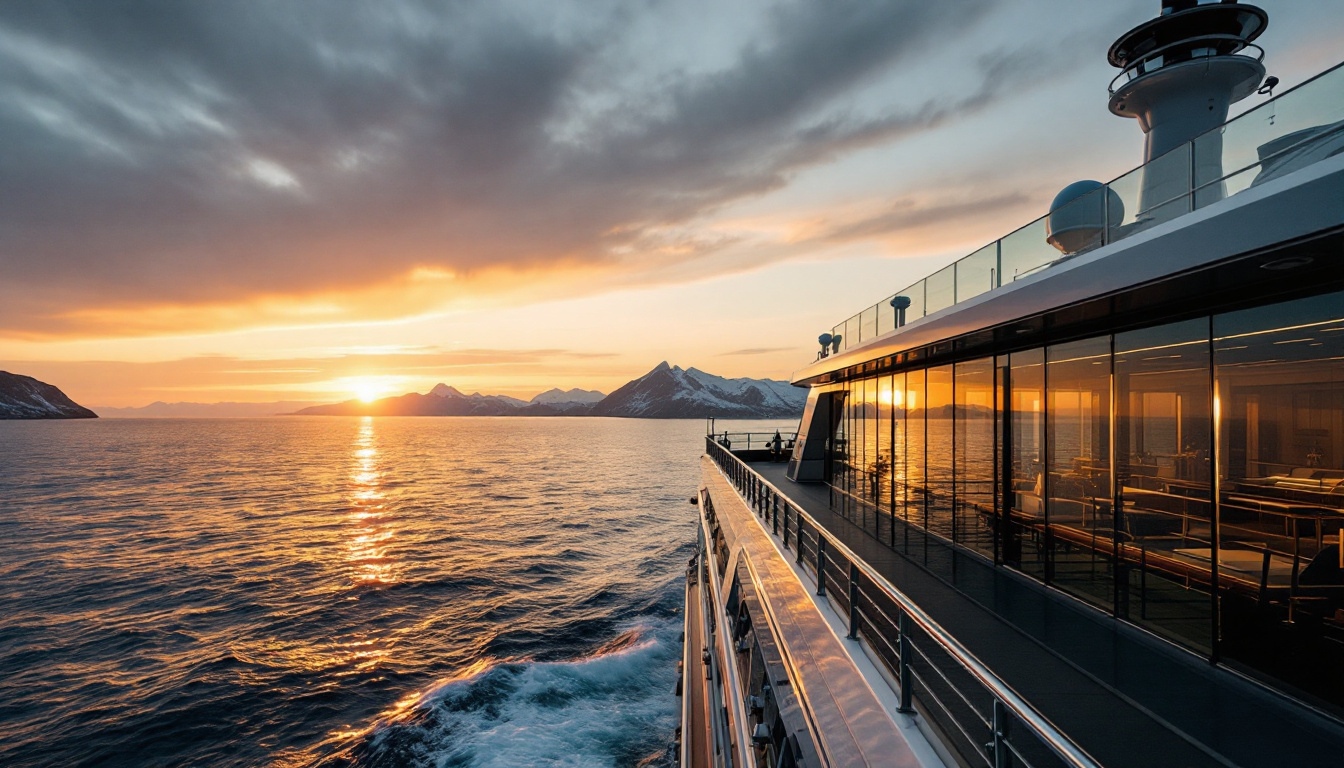
Silversea staked the class on a single architectural premise: the typical cruise-ship problem is that public venues are stacked vertically up an atrium, which creates corridors and pinch points and disconnects the guest from the sea. The Nova answer is to spread the major venues horizontally across three decks (4, 5 and 10), glaze the starboard hull asymmetrically to maximise sea-facing wall area, and eliminate the conventional central atrium entirely. The visual effect from the starboard side of the boat is striking — there is more glass than there is steel above the waterline on three decks — and the practical effect when you walk the ship is that you are rarely more than fifteen seconds from a window.
The trade-off is real and worth noting. Cabins on the port side from deck 6 upward sit behind the public-deck overhangs and have slightly less direct sea view than the equivalent starboard cabins. The line does not differentiate pricing on port-versus-starboard at booking, which I think they should, and which a competent travel advisor will sort out for you. The Otium Suites at the aft round, which exist on both sides, are the unambiguous winners of the design — 270-degree wraparound glazing and the largest exterior verandas in the Silversea fleet.
The dust-up that the Nova class has not entirely settled is the absence of a conventional theatre. Where Silversea’s older ships have a 600-seat show lounge, Nova has the Dusk Bar / Marquee outdoor venue and the Venetian Lounge as a multi-purpose space. The line has moved away from production-show entertainment toward small-format jazz and cabaret, which works for the guest demographic but disappoints guests expecting Silversea-classic stage shows. I think the call is correct for the brand’s repositioning toward Explora-style “ocean wellness” tonality, but it remains a topic of guest feedback.
The propulsion architecture
Both ships are dual-fuel — they can run on either LNG or marine gas oil — with battery-hybrid auxiliary power for harbour and slow-speed operation. The LNG bunker availability question, which was the open issue at delivery, has resolved better than I expected:
- Mediterranean: Barcelona, Marseille, Civitavecchia, Piraeus and Genoa all bunker LNG reliably. Ray has been on near-100 percent LNG operation through the 2026 Mediterranean season.
- Caribbean: San Juan, Bridgetown, and Cozumel bunker LNG; St. Thomas and Castries do not. Nova’s 2024-25 winter ran approximately 65 percent LNG. The 2025-26 Caribbean winter, which Ray ran while Nova was in dry-dock, pushed that to roughly 80 percent through deliberate itinerary planning.
- Alaska: Vancouver bunkers LNG; the Alaska ports themselves do not. Nova’s 2025 Alaska season averaged roughly 40 percent LNG, with the balance on low-sulphur MGO. This is the gap the next-generation hydrogen fuel cells are meant to close, eventually.
Both ships are plug-in shore-power capable, which has reduced harbour-emissions complaints in Civitavecchia and Vancouver materially. The hydrogen fuel cells are designed-in but not yet installed; the public timeline has slipped from “during the original build” to “potentially during a future dry-dock once a marine-certified cell stack is available at scale,” which is honest of the line to acknowledge.
The on-board product
The Nova-class soft product has settled into a recognisable shape after two seasons. Service is the recognisable Silversea register — butler-led, gracious, slightly stiffer than Regent and noticeably stiffer than Explora. The suite product remains category-leading on space-per-guest metrics; the entry Classic Veranda Suite is 33 square metres including balcony, the Premium Veranda is 35 square metres, and the Otium Suite is 84 square metres with a 30-square-metre wraparound veranda.
The dining program is genuinely strong. Eight venues:
- S.A.L.T. Kitchen — destination-rotating regional menu. On Ray in the Mediterranean summer 2026, this is running a Croatian-Albanian-Greek menu through August. The kitchen sources roughly 60 percent of produce within the immediate region of each port.
- La Dame — French signature dining, surcharge USD 60. The menu is held over from older Silversea ships.
- Kaiseki — Japanese multi-course tasting, surcharge USD 60. Sushi counter at lunch is included.
- Atlantide — seafood-focused main dining room, no surcharge.
- La Terrazza — Italian, no surcharge, lunch and dinner.
- Silver Note — small-plates jazz venue, no surcharge, 8 pm seatings.
- Spaccanapoli — pizza-and-pasta deck venue, casual, no surcharge.
- The Marquee — outdoor pool-deck grill, no surcharge.
The all-inclusive bundle covers beverages (including a strong by-the-glass wine program), gratuities, butler service, and one shore excursion per port — which is the meaningful pricing differentiator from Explora. Champagne by default is Pommery; the upgrade-to-Krug option costs USD 40 per glass.
The third hull
Royal Caribbean Group confirmed steel cutting on the third Nova-class sister at Meyer Werft Papenburg in February 2025, with contracted delivery in late 2027. The name has not been formally announced — internal references suggest Silver Sun — and the build specification is largely identical to Nova and Ray with two open questions. First, whether the hydrogen fuel cells finally install on this hull during the build rather than being deferred to a dry-dock retrofit. Second, whether the absence of a conventional theatre gets revisited; guest-feedback data from Nova and Ray clearly shows the older-Silversea-guest cohort missing it.
A fourth Nova-class hull was widely reported in the trade press in late 2024 but has not been confirmed by Royal Caribbean Group in subsequent quarterly results. I would not count on a fourth ship until the yard slot is publicly announced.
What I am watching for the back half of 2026
Two items. First, the Mediterranean rotation conflict — having both Nova and Ray in the same basin from May through October is the first capacity test for the class’s home itineraries, and St. Tropez and Mykonos berth allocations are tight. Second, the announcement around the hydrogen cells, which I expect either at Posidonia in June 2026 or at the Monaco Yacht Show in September. The class was designed for them; the certification path is the constraint, not the engineering.
For a guest deciding between Nova-class and the older Muse-class Silversea ships, my read is straightforward: take Nova or Ray for the public space and the food, take a Muse-class hull (Silver Moon, Silver Dawn) for the more conventional suite-to-public-space ratio and the better-resolved theatre programme. The Nova class is what Silversea wants to be next; the Muse class is what Silversea has been at its best.
Standing Questions
- What does 'horizontal design' actually mean on these ships?
- Conventional cruise ships stack public venues vertically with corridors connecting them. Nova-class flips that: the main public venues — Marquee pool deck, Atlantide lounge, S.A.L.T. Kitchen, Otium spa — are spread horizontally across decks 4, 5 and 10, with the starboard side of the ship deliberately glazed asymmetrically to maximise sea views. The trade-off is that port-side cabins above deck 5 have slightly more obstructed views than on a conventional Silversea hull.
- How many cabins and what is the suite mix?
- 364 suites across 13 categories on each ship, accommodating 728 guests at double occupancy with about 560 crew — a crew-to-guest ratio of 1:1.3 that is competitive with Regent. The signature Otium Suites occupy the rounded aft on decks 6, 7 and 8, with 270-degree wraparound windows. The new Master Suites at the bow measure 156 square metres including balcony.
- Is the LNG fuel actually being used?
- Yes, both ships bunker LNG as primary fuel when itineraries permit. Silver Ray runs Mediterranean rotations out of Civitavecchia and Barcelona where LNG bunker is available. Silver Nova alternated LNG and MGO during her 2024-25 Caribbean season because of bunker logistics in San Juan; from her 2025 Alaska season onward the line has prioritised LNG-available itineraries for both hulls.
- How does the food program differ from older Silversea ships?
- Nova-class introduced S.A.L.T. — Sea and Land Taste — a destination-specific dining concept that runs S.A.L.T. Kitchen (a rotating menu reflecting the current itinerary's regional cuisine), S.A.L.T. Bar (regional spirits), and S.A.L.T. Lab (cooking classes). On Silver Ray in the Mediterranean this summer, S.A.L.T. Kitchen is running a Croatian-Albanian Adriatic menu through August. Beyond S.A.L.T., the ships keep the traditional Silversea venues — La Dame, Kaiseki, Atlantide, La Terrazza — with the addition of Silver Note as a small-plates jazz venue.
- What is the third Nova-class ship and when does it deliver?
- The third sister, provisionally Silver Sun though the name has not been formally confirmed by Royal Caribbean Group, is contracted at Meyer Werft Papenburg for 2027 delivery. Steel was cut in early 2025. She is expected to follow the Nova hull form with minor refinements; whether the hydrogen fuel cells finally install on this hull or wait for a fourth sister is the open question.