Accor and LVMH have been building toward Orient Express Corinthian since the 2022 partnership announcement that brought the historic brand under joint commercial development. The boat was christened at Chantiers de l’Atlantique in Saint-Nazaire on 29 April 2026 in a ceremony attended by Accor CEO Sébastien Bazin and LVMH chairman Bernard Arnault — the kind of paired senior-leadership attendance that signals the strategic weight both companies are placing on the launch. The vessel is now in sea trials and is scheduled to enter revenue service in mid-summer 2026.
What follows is the ship as built, the on-board product as designed, the parent-brand context that distinguishes this launch from a standalone cruise-line entry, and the operational shape of the inaugural Mediterranean and Caribbean seasons.
The ship
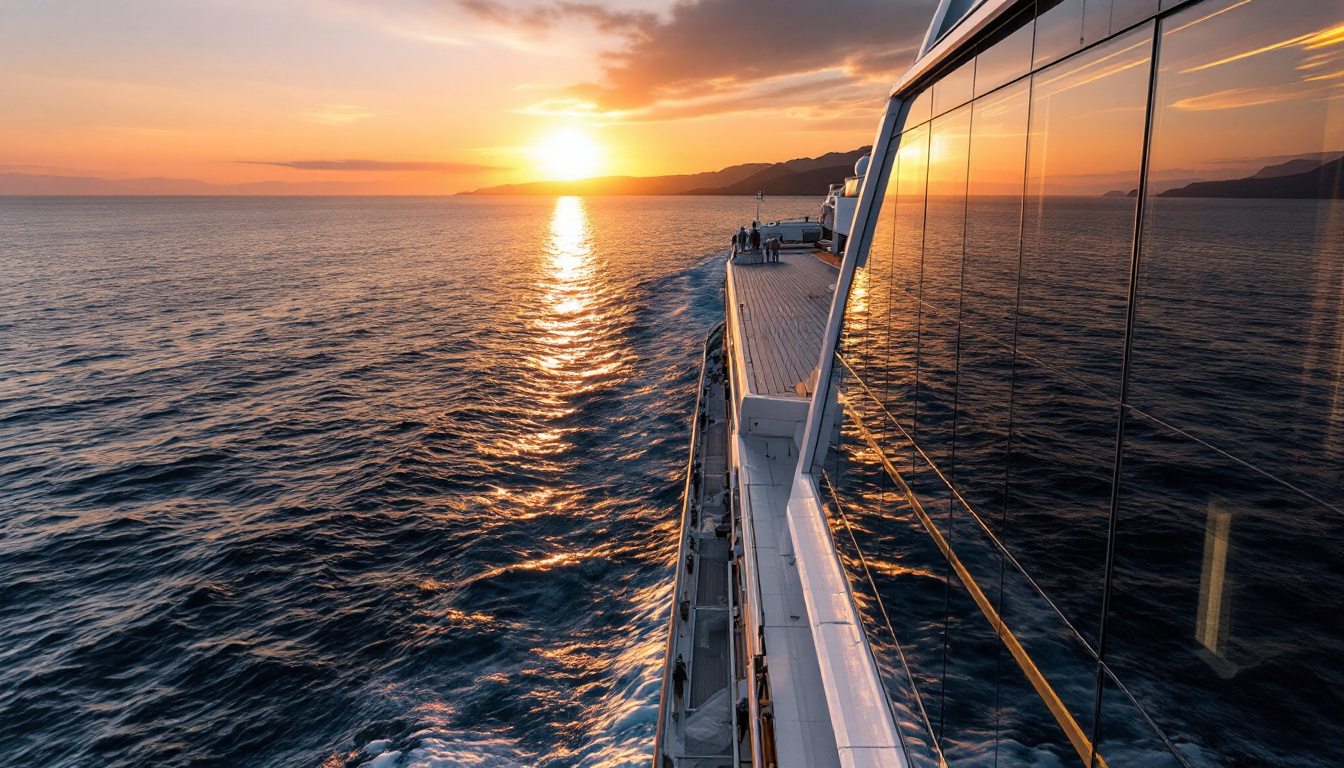
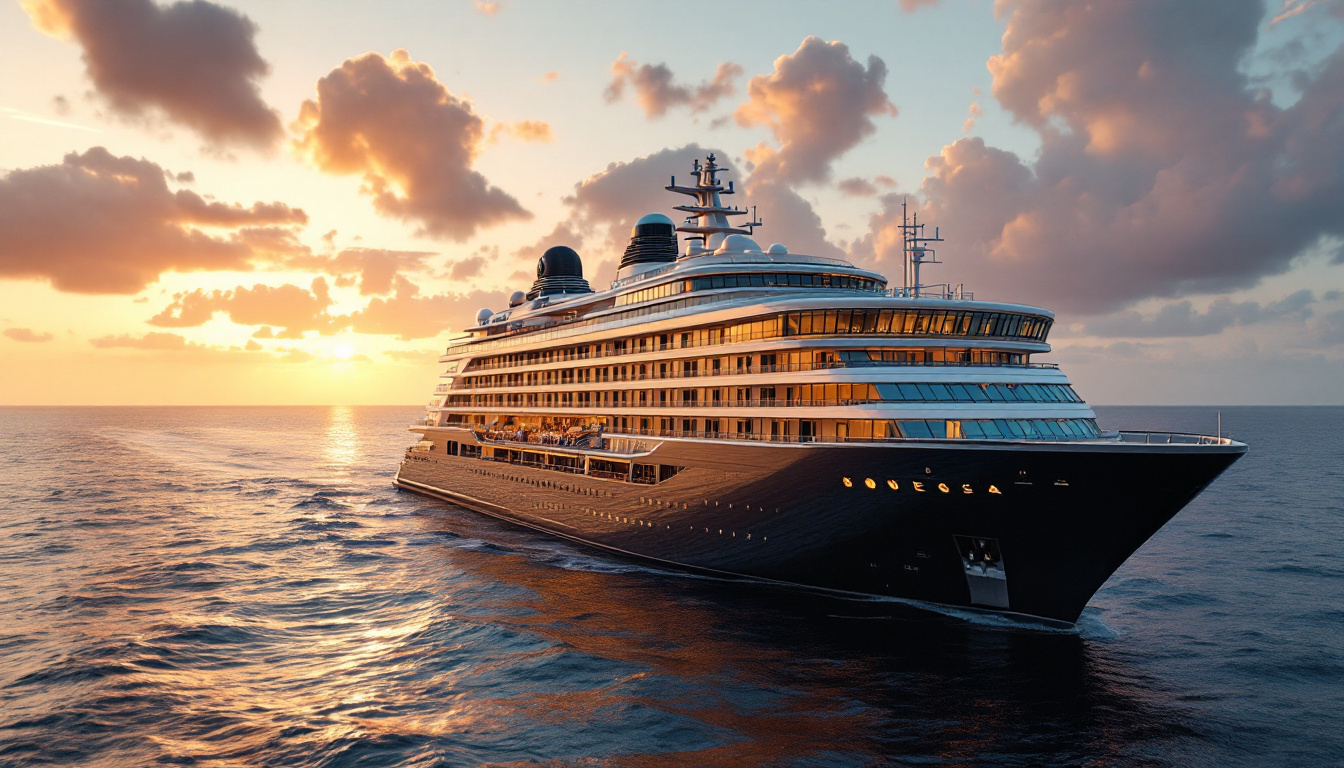
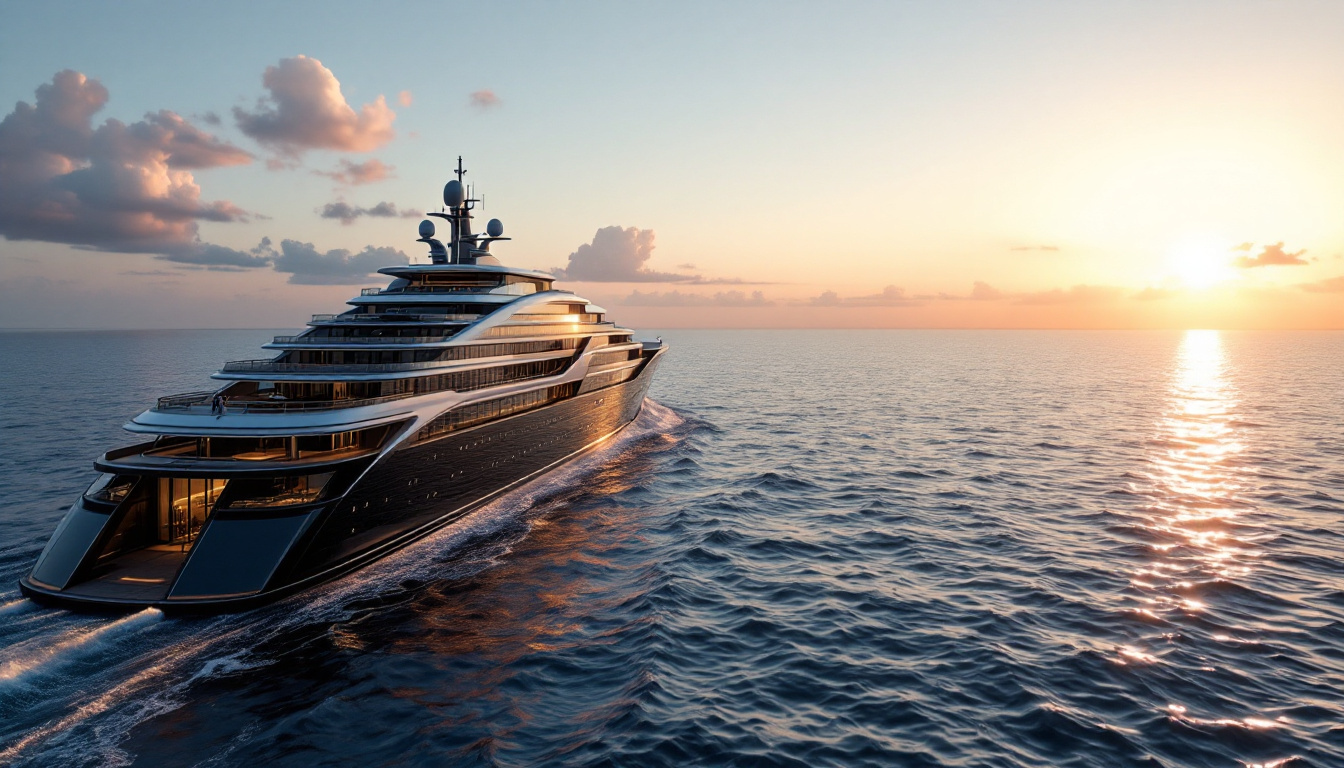
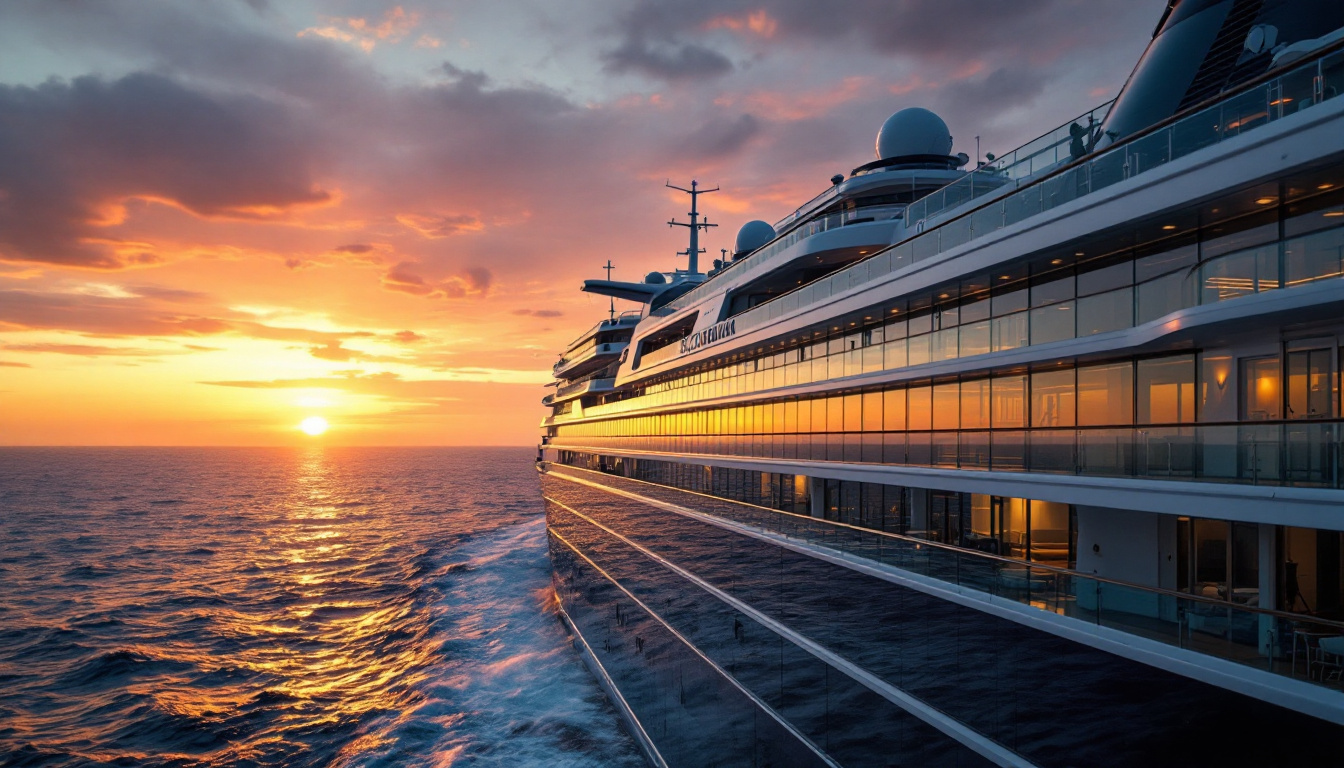
Orient Express Corinthian is the largest sailing yacht ever built. Specifications:
- 220 metres length overall, 15,000 tonnes displacement
- 54 suites ranging from 45 to 230 square metres across four decks
- Three composite masts carrying approximately 4,500 square metres of sail area in a fully-automated sail-handling system
- Auxiliary diesel-electric propulsion for windless conditions and harbour manoeuvring
- LNG bunker capability for the auxiliary propulsion
- Built at Chantiers de l’Atlantique, Saint-Nazaire — the same yard that built Ritz-Carlton Ilma and Luminara
The sailing-yacht classification is the most distinctive aspect. The brand has staked the design on genuine sail-powered cruising, not on motor-yacht-with-decorative-masts. The automated sail-handling system, developed in collaboration with Chantiers de l’Atlantique and the marine engineering firm Solar Impulse spinoff Wind Sailing Technologies, allows the three masts to be raised, trimmed and reefed without crew on the masts themselves. Sail area at 4,500 square metres is roughly equivalent to a J-Class racing yacht scaled up to ocean-cruise dimensions.
The largest comparable existing sail-powered vessel in the cruise segment is Star Clippers’ Royal Clipper at 5,000 GT and 42 suites. Corinthian is three times the gross tonnage and accommodates marginally more guests at twice the per-guest space. The structural engineering required to make the masts work at this scale is genuinely new; the masts are composite (carbon fibre with high-strength polymer matrix) rather than steel, which is what makes the height and weight profile commercially viable.
The on-board product
Interior design by Maxime d’Angeac, the architect who designed the Orient Express La Minerva hotel in Rome that opened in 2025 and who has been the brand’s design director throughout the Accor-LVMH partnership. The interior language is the historic Wagons-Lits tradition translated to a marine context — Art Deco motifs, marquetry, fluted glass, the same colour palette as the train and hotel programmes.
Three dining concepts on board:
- A signature restaurant with a French culinary programme
- A Mediterranean concept rooted in seafood
- A casual all-day option
Public spaces include a library, a smoking lounge, a screening room, and an exterior terrace. The spa programme is more modest than the contemporary luxury-cruise norm; the line has positioned the on-board wellness offering as supportive rather than as a destination feature.
The suite product is the strongest element of the on-board specification. The 54 suites are deliberately varied — there is no standard cabin shape, and the suite layouts respond to the structural constraints of the sailing-yacht hull form. Entry-tier suites at 45 square metres are larger than entry tiers on most luxury cruise hulls. The top-tier suites at 230 square metres approach private-yacht owner-suite scale.
Crew-to-guest ratio is approximately 1:1.4 (140 crew for 108 guests at full double occupancy of the 54 suites), which is competitive with the contemporary luxury cruise norm but less generous than the Aman or Four Seasons benchmarks.
The inaugural season
The 2026 Mediterranean and Adriatic season runs from May to October. Itineraries are deliberately short — two to eight nights — with the brand’s commercial strategy explicitly inviting back-to-back bookings to construct longer journeys. The format suits the sailing-yacht context: shorter point-to-point sailings allow more under-sail time per voyage and avoid the long open-ocean passages that would compromise the experience.
Confirmed inaugural-season itineraries include:
- Cannes-Monaco short loops
- French Riviera and Ligurian coast extended sailings
- Italian coast and Aeolian Islands
- Adriatic loops from Venice through Croatian and Montenegrin ports
- Greek isles short rotations
The autumn 2026 transatlantic crosses from Lisbon to Bridgetown in mid-November. Caribbean rotations from November 2026 through March 2027 include Saint-Barthélemy, Antigua, the Grenadines, and the BVI. Spring 2027 transatlantic returns to the Mediterranean for the second season.
The Accor-LVMH brand context
The launch of Corinthian is best understood within the broader Orient Express portfolio rebuild that Accor and LVMH have been jointly developing since 2022:
- Orient Express La Minerva opened in Rome in 2025 — a 17th-century palazzo near the Pantheon, restored to operate as the brand’s first hotel
- Orient Express La Venezia opens in 2026 in the Palazzo Donà Giovannelli
- The historic train is scheduled to return to service in 2026 with new routes
- Orient Express Corinthian — the marine arm, entering service in summer 2026
- A second sailing yacht is contracted at Chantiers de l’Atlantique for 2027 delivery, with the working name Orient Express Stellaris
The integrated luxury-platform strategy gives the Corinthian launch unusual commercial leverage. A guest booking the boat is buying access to a curated journey that can integrate the train (a Paris-Vienna-Venice routing prior to embarkation, for example) and the hotels (a pre-cruise stay at La Minerva in Rome, a post-cruise stay at La Venezia). This is structurally different from any other luxury-cruise launch in the modern era; the brand integration depth gives Orient Express a marketing advantage that the cruise-line-only competitors cannot match.
Pricing and booking access
The brand has been deliberately guarded about published pricing. Marketing is primarily through travel-advisor channels rather than direct retail. Indicative rates compiled from advisor channels:
- A four-night Mediterranean sailing, entry-tier suite, books at approximately EUR 14,000-18,000 per person
- A seven-night sailing in a mid-tier suite, EUR 25,000-40,000 per person
- An eight-night sailing in the upper suite categories, EUR 60,000-90,000 per person
Per-night equivalents place Corinthian in the same bracket as Ritz-Carlton Evrima and Four Seasons I at the entry tier, and meaningfully above those at the upper tiers. The pricing reflects the unique sailing-yacht positioning and the brand-portfolio integration access.
What I am watching
Two items. First, the actual sailing performance — the automated three-masted rig at this scale is structurally new, and the first ninety days of operation will reveal whether the design assumptions about wind capture and under-sail speed hold in real-world Mediterranean and Atlantic conditions. The brand has guided to seventy-percent-of-operating-hours under sail; whether that figure holds is the operational test.
Second, the integration of the train resumption, which has slipped at least twice from the original 2025 target. The brand-portfolio integration strategy depends on the train actually being operational; if the train slips again, the integrated journey product is less compelling and Corinthian competes on standalone cruise economics.
For the prospective guest in 2026: the inaugural-season Mediterranean inventory is the booking opportunity. The Caribbean winter season has more availability and offers the additional value of operating under-sail in the trade-wind belt, which is the genuine sailing-yacht experience in the most reliable wind context. The Stellaris second hull arrives in 2027, which provides additional inventory but will be a second sister rather than a different product.
Standing Questions
- Who actually owns and operates Orient Express Corinthian?
- The Orient Express brand is operated by Accor under a 2022 partnership agreement with LVMH, which owns the Orient Express trademark. The hospitality brand has expanded from the rail service to hotels (La Minerva opened in Rome in 2025; Venezia opens 2026) and now to maritime. Vessel ownership and operations sit within Accor's marine subsidiary; the ship was commissioned and financed by Accor.
- Why is Corinthian classified as a sailing yacht rather than a motor yacht?
- She carries three composite masts with a total of approximately 4,500 square metres of sail area. The masts use a system of automated sail handling — the largest single masted-rig project at this scale ever built. Auxiliary diesel-electric propulsion is on board for windless conditions and harbour manoeuvring, but the design intent is genuine sail-powered cruising. The largest comparable sail-powered vessel is the Star Clippers' Royal Clipper at 5,000 GT; Corinthian is three times the size.
- What does an itinerary actually look like?
- The inaugural Mediterranean and Adriatic season runs from May to October 2026, with itineraries ranging from two to eight nights. Back-to-back bookings allow guests to extend voyages. Specific itineraries include French Riviera, Italian coast, Greek isles, and Adriatic loops. Caribbean rotations begin November 2026 from Bridgetown.
- What does it cost?
- Pricing has not been fully publicly published; the brand is marketing primarily through travel-advisor channels. Indicative rates: a four-night Mediterranean sailing in an entry suite books at approximately EUR 14,000-18,000 per person. Eight-night sailings in larger suites range from EUR 35,000 to EUR 90,000 per person depending on suite category.
- How does the on-board product feel?
- Unambiguously French art de vivre — the brand's positioning explicitly invokes the Wagons-Lits tradition of the historic Orient Express train. Interior design by Maxime d'Angeac, who designed the Orient Express La Minerva hotel in Rome. Three dining concepts. Service register is French-language-first with bilingual capacity. The integration with the broader Orient Express portfolio — the upcoming train resumption, the hotels — is a deliberate strategic move.