I have spent two of the last three austral summers on Seabourn Pursuit — December 2023 with the inaugural Antarctica deployment and again in November 2025 for a Falklands-South Georgia-Antarctic Peninsula crossing — and have followed Venture’s deployment patterns closely since her delivery. The two ships represent the most operationally serious expedition build the luxury segment has produced, and the 2026 deployment schedule is the most ambitious year either hull has run.
What follows is the deployment, the on-board product, and a candid read on where the Seabourn expedition pair sits relative to Silversea’s expedition fleet, Ponant’s Le Commandant Charcot, and Scenic Eclipse II.
The two ships
Seabourn Venture delivered from T. Mariotti’s Genoa yard in July 2022 — eighteen months later than the original 2020 contract date — and entered service on 27 July 2022 with a maiden out of Tromsø. The delay was the protracted T. Mariotti-Seabourn dispute over build-quality issues that the line resolved by holding back delivery payments and demanding rework. The boat that emerged is sound; the early operational reporting from the 2022-23 first season flagged some HVAC and water-systems issues that were resolved during her June 2023 dry-dock at Marseille.
Seabourn Pursuit delivered from the same yard in August 2023, with a maiden out of Genoa on 12 August 2023. The build benefited from the lessons of Venture’s delivery; her first season ran more cleanly. Her Kimberley deployment in 2024 was widely reported as the strongest Kimberley-region expedition product on the market that year — better than Ponant’s Le Champlain and Le Lapérouse on naturalist-team depth and submersible access.
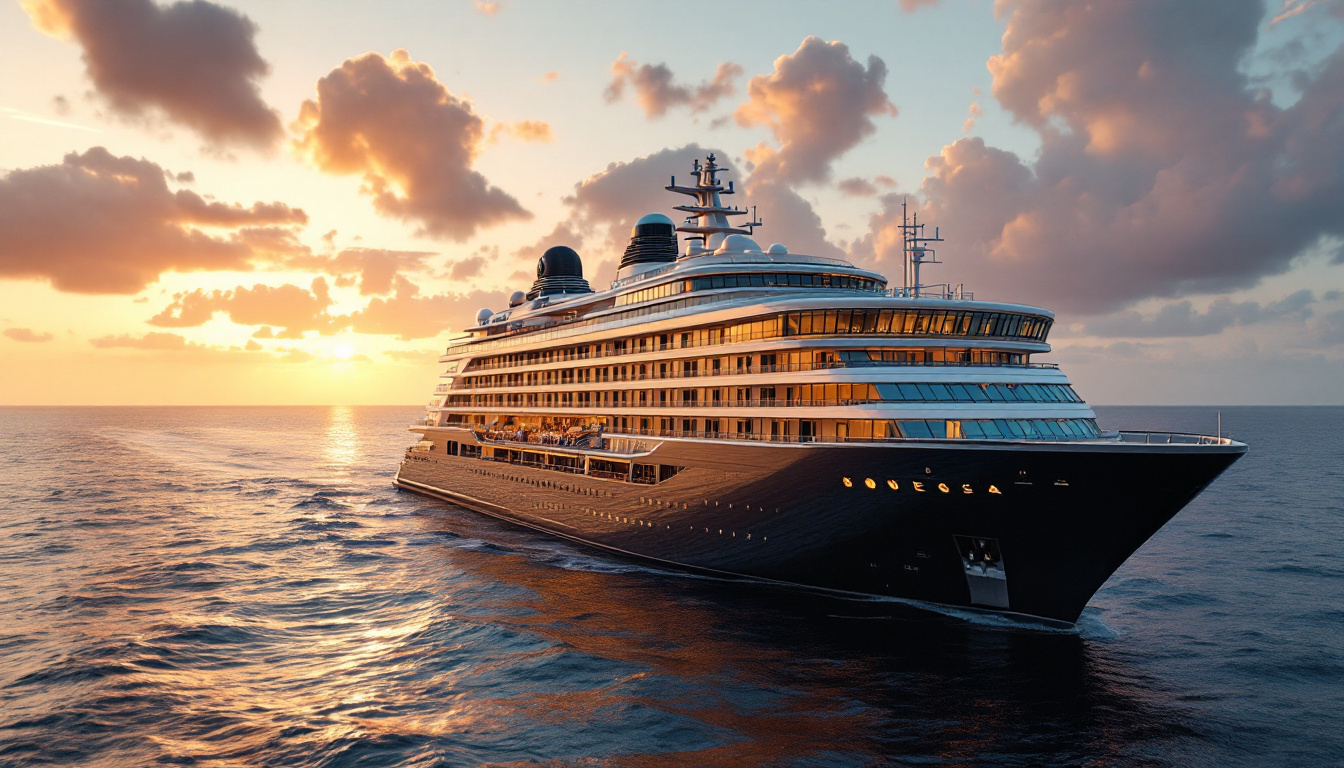
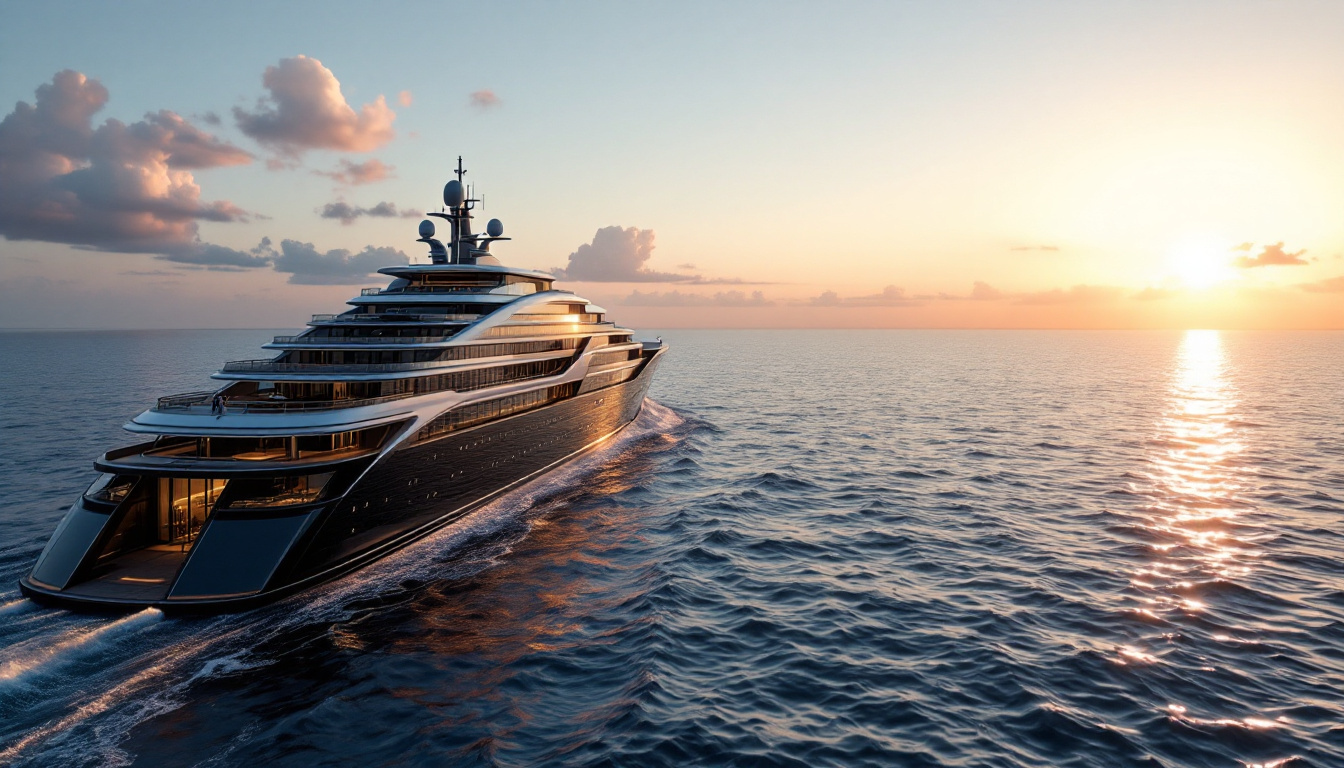
Technical specifications are identical. Length overall 170 metres. Beam 27.5 metres. Gross tonnage 23,000 GT. Polar Class 6 ice classification (the right rating for the polar shoulder seasons but not for true winter polar work — Le Commandant Charcot at PC2 remains a separate category). All-veranda accommodation in 132 suites for 264 guests, with 168 crew giving a 1:1.6 crew-to-guest ratio. Two custom Triton 3300/3 submersibles rated to 300 metres, twenty-four Zodiacs, two helicopters on Pursuit (Venture does not carry helicopters), kayaks, paddleboards and a Sea Bob fleet.
The 2026 deployment
Both ships run a roughly symmetrical year, though Venture’s is the more ambitious itinerary.
Pursuit 2026
- February through April: South Pacific staging — repositioning from Antarctica north through New Zealand, Tahiti, and into Australian waters
- April through September: Kimberley region. The Kimberley itineraries are ten- and eleven-night runs between Broome and Darwin, with three or four Zodiac landings per day at sites including Montgomery Reef, the Mitchell Falls, Hunter River, and the Horizontal Falls. Helicopter excursions to the Bungle Bungles are available at supplement
- September: 82-day “Across Three Continents” repositioning from Broome to Ushuaia. This is the season’s signature long-format voyage and represents Pursuit’s first such itinerary
- November through February 2027: Antarctica, the Falklands and South Georgia. The Pursuit Antarctica deployment runs twelve- to twenty-two-night formats, with the longer runs adding South Georgia and the Falklands to the standard Peninsula itinerary
Venture 2026
- March through July: Iceland, Greenland, Labrador and the British Isles. The British Isles loops run twelve to fourteen nights with Zodiac landings on the Hebrides, St Kilda and the Faroes
- August through October: six Northwest Passage and Canadian Arctic voyages of eight to twenty-four nights
- October through November: southbound repositioning through the Caribbean and into South America
- December through February 2027: Antarctica, joining Pursuit for the austral season
The Northwest Passage voyages are the season’s headline
Six voyages between August and October — three full transit attempts of twenty-four nights each, and three shorter Canadian Arctic loops of eight to twelve nights. The full transit runs Nome (Alaska) eastbound through the Bering Strait, into the Beaufort Sea, through Amundsen Gulf, into the Northwest Passage proper via Coronation Gulf and Queen Maud Gulf, through Bellot Strait, into Lancaster Sound, and exits via Baffin Bay to Halifax. Ice routing depends on the year; the Bellot Strait route has been the more reliable line since 2022 as the M’Clure Strait passage further north has become more variable.
These voyages are the most operationally demanding the line runs. The expedition team for the Northwest Passage runs to thirty rather than the standard twenty-three, with additional ice navigators on the bridge and a doctor-second on staff. Ship-to-shore communications via Iridium are augmented with a Starlink kit (subject to coverage gaps above 70°N, which still exist). Carry weight on board for full self-sufficiency is roughly forty-five days at full guest load.
Per-person pricing for the August 2026 full-transit voyage was USD 45,000 in a base Veranda Suite at booking last autumn. The voyage sold out within ninety days. Resale availability through travel advisors is currently quoting USD 52,000 to USD 58,000 in the same suite category.
The on-board product
Service is recognisable Seabourn — gracious, professional, slightly less stiff than Silversea, noticeably more polished than Ponant. The crew-to-guest ratio of 1:1.6 is the highest in the expedition luxury segment, and it reads in the response time to suite requests and the quality of the expedition-team interaction during landings.
The dining program is built around four venues. The Restaurant is the main dining room, no surcharge, with a strong wine pairing on offer. The Colonnade is the more casual buffet-and-grill venue running breakfast through dinner. Earth and Ocean is the casual pool-deck venue. The Discovery Center is the expedition-briefing space that doubles as a casual eating venue at lunch. There is no dedicated speciality restaurant on either hull, which is the meaningful divergence from the contemporary Seabourn ocean fleet (Encore, Ovation, Quest, Sojourn).
Inclusive of beverages and gratuities. Expedition activities including Zodiac landings, kayak outings and hikes are included. Submersible dives carry a USD 600-per-person supplement; the dives run forty-five to seventy-five minutes depending on conditions and are weather-dependent (typically eight to twelve dives per Antarctic voyage, more in calmer waters). Helicopter excursions on Pursuit (Kimberley and select Antarctica routings) range from USD 800 for short scenics to USD 1,800 for the longer Bungle Bungles excursions in the Kimberley.
Where Seabourn sits relative to its rivals
Three relevant comparisons. Silversea expedition — Silver Endeavour, Silver Cloud, Silver Wind, Silver Origin — competes on a slightly larger fleet basis but does not carry submersibles and has a less ambitious Antarctica deployment. Seabourn’s Antarctica product is, in my judgment, the stronger of the two for the genuine wildlife-and-landing experience; Silversea’s is better for guests who want a more conventional cruise wrapped around the expedition.
Ponant Le Commandant Charcot is the genuine ice-class outlier — PC2 versus PC6 — and runs the only luxury North Pole expeditions in the market. For high-Arctic, deep-ice work Charcot is the unambiguous choice; for shoulder-season Antarctica and the Kimberley, Seabourn’s hulls run cleaner and more spaciously.
Scenic Eclipse II is the closest direct competitor on hull design and submersible access. Scenic’s product is slightly more all-inclusive (helicopter time is included on the Eclipse hulls, not on Pursuit), and the food program is more polished. Seabourn wins on crew-to-guest ratio and on Antarctica deployment scale. Both are strong.
What I would book
For the 2026-27 season: Venture’s August Northwest Passage if the resale market clears below USD 55,000 per person; Pursuit’s December Antarctica with the South Georgia extension for the full-fat expedition experience. For the Kimberley, Pursuit through August or September when the dry season is at its best.
Standing Questions
- What are the actual technical specs of the Seabourn expedition ships?
- Both Pursuit and Venture are 170 metres LOA, 27.5 metres beam, 23,000 gross tons, with Polar Class 6 ice classification. They carry 264 guests in 132 all-veranda suites with a crew of 168 — a crew-to-guest ratio of about 1:1.6 that is the highest in the expedition luxury segment. Two custom Triton 3300/3 submersibles, twenty-four Zodiacs, plus kayaks, paddleboards and a small E-foil fleet.
- Which ship goes where in 2026?
- Pursuit: Kimberley (Australia) from April to September, then crosses to South Pacific and into Antarctica for the November 2026 to February 2027 austral summer. Venture: Northern Hemisphere from spring through autumn — Iceland, Greenland and the British Isles from March to July, then six Northwest Passage and Canadian Arctic voyages August through October, then south to Antarctica for the December-February austral season.
- What does the Northwest Passage deployment actually cover?
- Six voyages ranging from eight to twenty-four nights between August and October. The full Northwest Passage transit runs Nome (Alaska) to Halifax via the Bering Strait, Beaufort Sea, M'Clintock Channel, Lancaster Sound and Baffin Bay — approximately twenty-four nights. Shorter segments cover the Canadian Arctic islands without completing the full transit. The route ranges depend year by year on ice conditions; the 2026 transits are routed through Bellot Strait, which has been the more reliable path since 2022.
- How does Seabourn's expedition product compare to Silversea, Ponant or Scenic?
- Closer to Silversea than to Ponant or Scenic. Inclusive of beverages, gratuities, and a parka loan; expedition activities including Zodiac landings are included but submersible dives carry a USD 600-per-dive supplement and helicopter excursions (Pursuit only) range from USD 800 to USD 1,800. Crew-to-guest ratio favours Seabourn at the top end of the luxury-expedition segment; the submersibles are genuinely operated and not a marketing prop.
- What does an entry-level booking actually cost?
- A twelve-night Antarctica voyage on Pursuit, December 2026, entry-level Veranda Suite, books at roughly USD 22,000 per person double, all-in except submersible dives and gratuities-on-top. A twenty-four-night Northwest Passage on Venture, August 2026, books at roughly USD 45,000 per person double in a Veranda Suite. Owner's Suites on Antarctica routings run USD 55,000 to USD 75,000 per person.