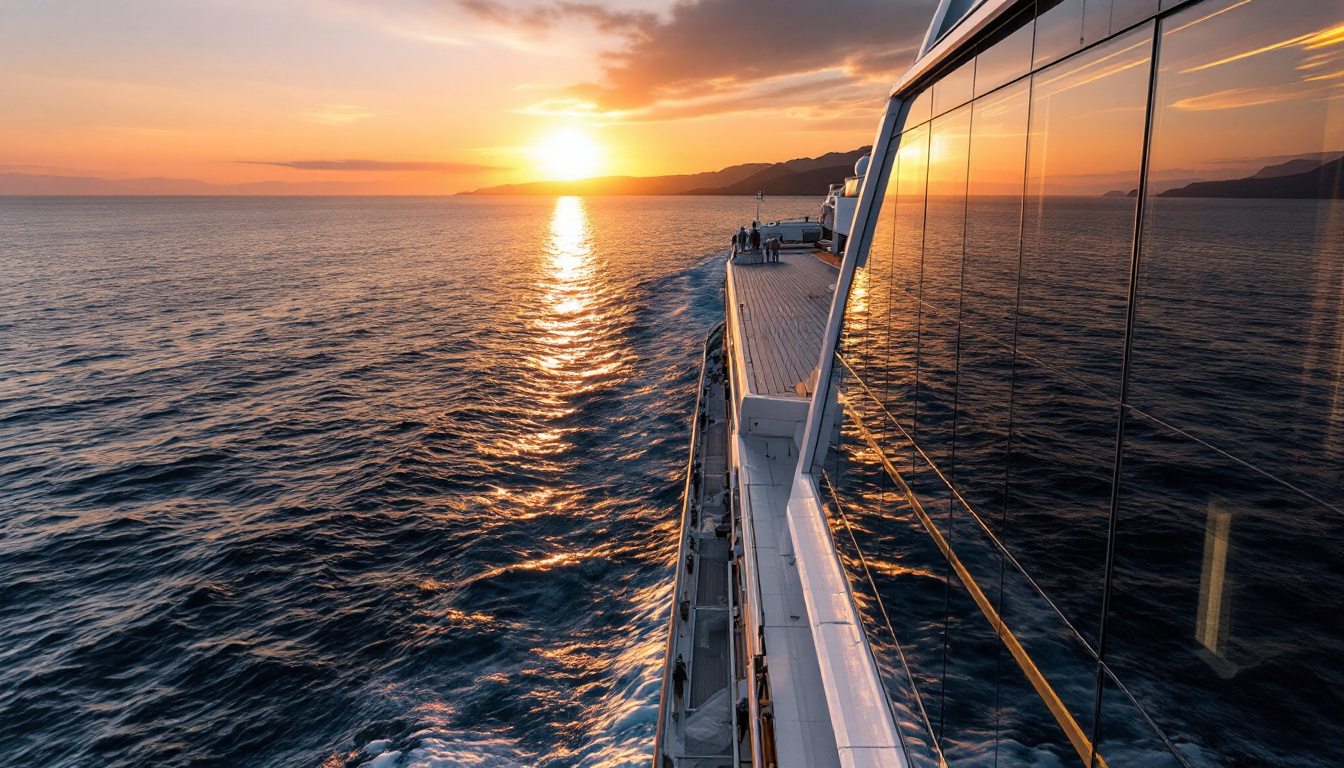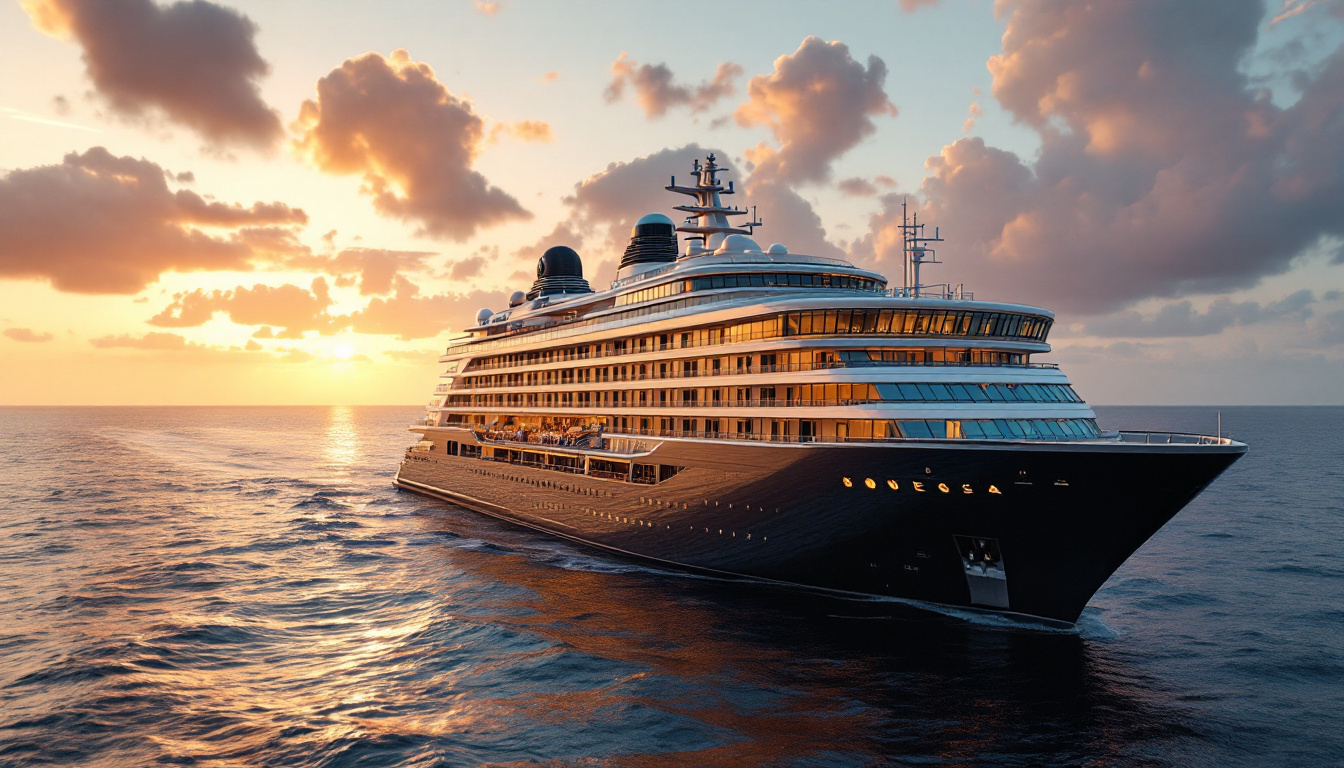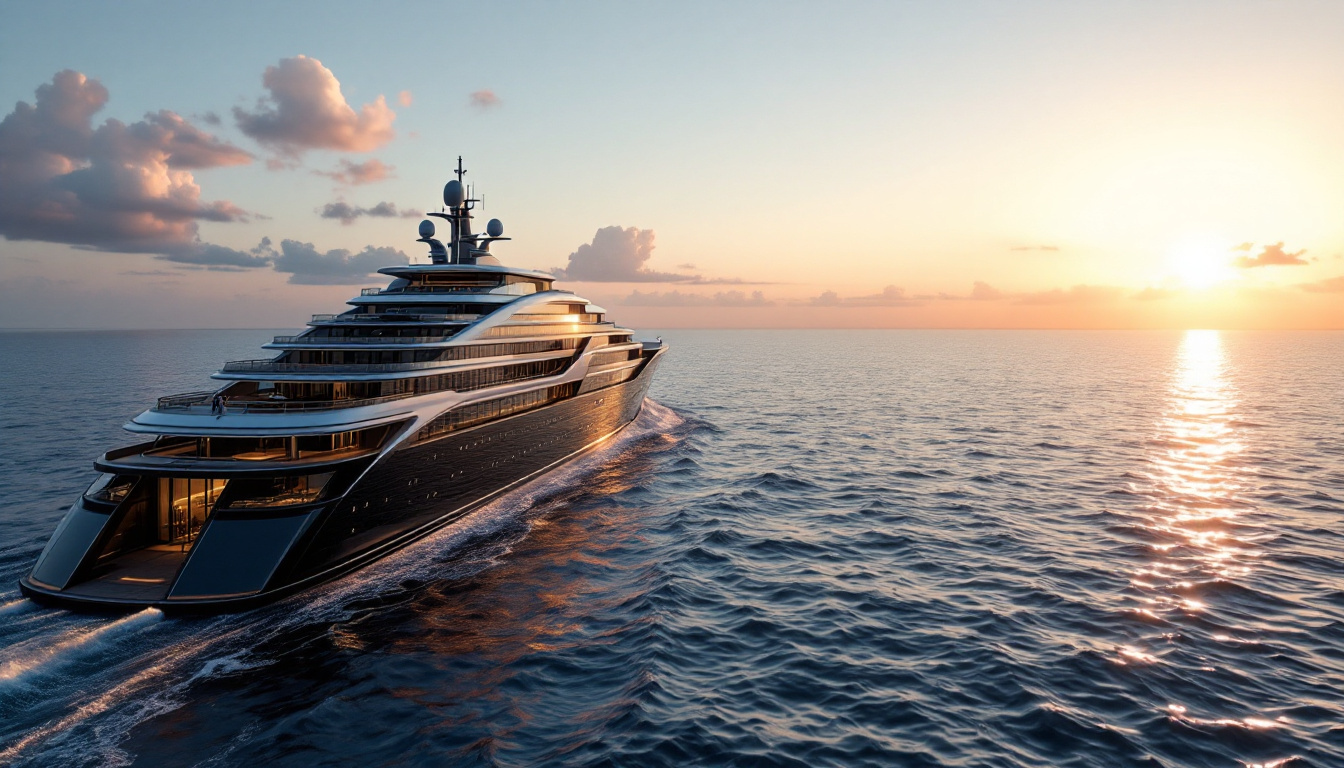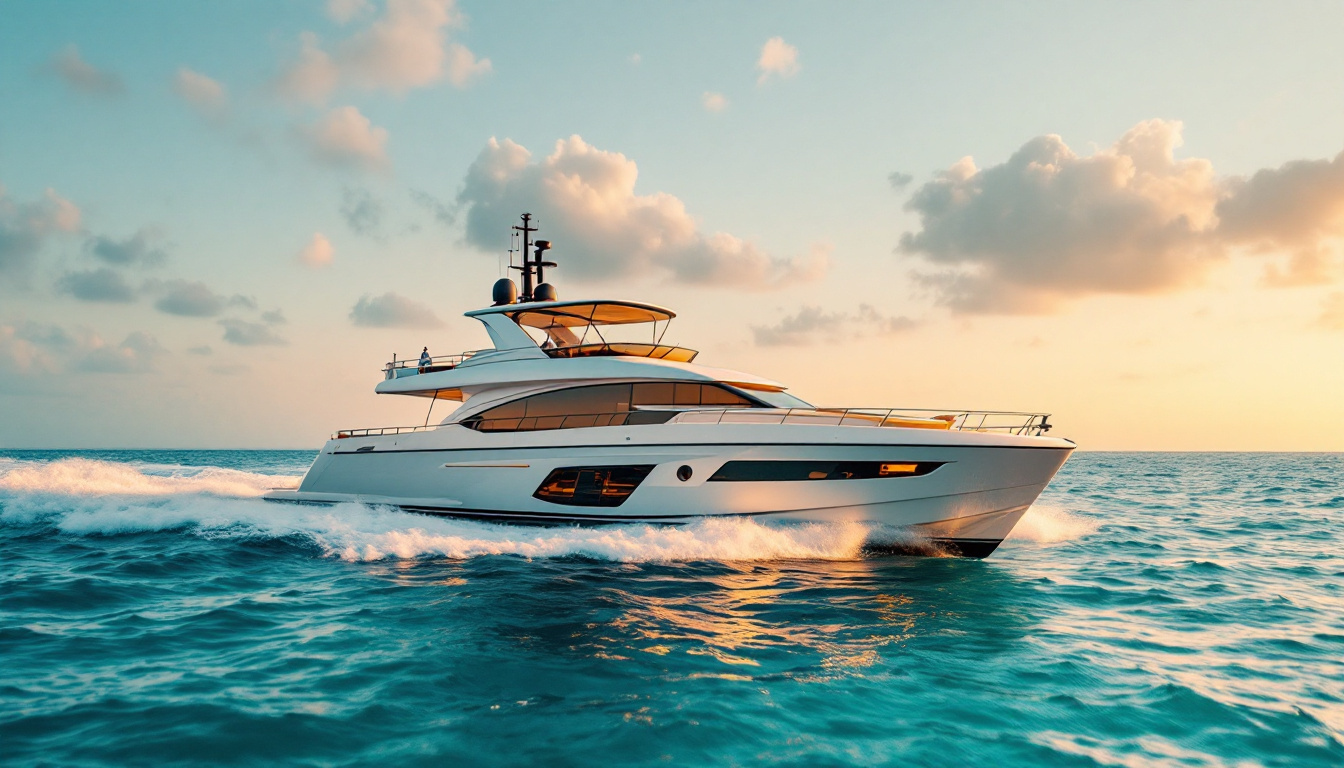
The Sunseeker Ocean 156 has the slightly awkward problem of being named for the wrong number. The 156 is the gross-tonnage figure, not the length. Length overall is 25.14 metres — 82 feet, by the customary American conversion — and at first sight the boat looks like a steroidal evolution of the Sunseeker 86, which it functionally is. The difference is that the Ocean 156 carries half again as much interior volume as the 86 it broadly replaces, and the engineering and naval architecture decisions Sunseeker has made to get there are interesting enough to merit attention even if you are not in the market for one.
I have been on three Ocean 156s now, all in the last eighteen months: hull number 01 at the Cannes Yachting Festival in September 2024 (her debut), hull 03 in Poole during a media day Sunseeker hosted in March 2025, and hull 06 in May 2026 off Cap d’Antibes, a boat owned by a German private investor whose office in Frankfurt connected me to the captain. The boats have evolved measurably across the three hulls, which is itself a story worth telling. Sunseeker has been refining the configuration in real time.
What the boat is
Length overall: 25.14 metres. Beam: 6.56 metres (21 feet 6 inches). Draft: 1.86 metres (6 feet 1 inch). Air draft: 9.6 metres (30 feet 6 inches). The hull is a semi-displacement GRP construction with a deep-V forward and a flat run aft, certified to CE A category — meaning ocean-capable in design terms, though the practical range will pin you to coastal passages rather than long deliveries.
The standard engine package is twin MAN V8 1300 in-line shaft installations, producing 1,300 horsepower per side. The optional upgrade is twin MAN V12 1650, producing 1,650 horsepower per side. Top speed on the V8 package, in flat conditions and trimmed, is approximately 24 knots — the captain on hull 06 quoted me an honest 24.2 knots at 90 percent throttle on a fairly clean bottom in early May. Top speed on the V12 package is approximately 27 knots, though the difference at cruising speeds (18–20 knots) is smaller than the brochure suggests.
Fuel capacity is 8,500 litres standard. Water capacity is 1,500 litres. At a comfortable 10–12-knot cruise — semi-displacement mode, off the planing step — range is approximately 900 nautical miles. That figure is what Sunseeker quotes; my own crude math on hull 06’s fuel burn at 11 knots gave me something a little under that, perhaps 820 nautical miles, which is more honest accounting for the realities of trim, wind, and the inevitable habit of running the air conditioning hard in August.
Accommodation is for eight to ten guests depending on the configuration chosen. The standard lower-deck layout is a forward VIP cabin with island bed and en-suite, a full-beam mid-ships master, and two guest twins (each convertible to a double). The optional sliding berth in the crew passage adds two additional berths. Crew accommodation is for three to four — captain, mate, stew — in the forepeak.
What is new and what is borrowed
The Ocean 156 sits in a Sunseeker product family that has been substantially renewed across the last three years. Some of what you see on the boat is new to this hull; some of it is borrowed from the smaller Predator 75 and the larger 116 Yacht. Pulling apart what is genuinely Ocean 156 from what is recycled platform thinking is useful if you are trying to evaluate the boat against, say, an Azimut Grande 26M or a Princess Y85.
What is new: the main-deck galley layout, with the cooking line outboard against the starboard hull rather than aft of the saloon. This is a configuration Sunseeker had not previously used at this size, and it is the largest single contributor to the increased social volume of the main-deck saloon. By moving the galley outboard, Sunseeker has effectively pushed the saloon dining area forward by about 1.4 metres, which on a 25-metre boat is a substantial reclamation. The owner of hull 06 was emphatic that this single decision was what convinced him to order the boat after looking at the Princess Y85, which retains a more traditional galley-aft layout.
Also new: the foredeck terrace arrangement, with twin sun-loungers flanking a forward jacuzzi rather than the more conventional single C-shaped settee. The arrangement is more usable for two-couple cruising than the prior generation and, frankly, easier to keep tidy with a smaller crew.
What is borrowed: the helm console, which is a refined version of the Predator 75 console (now in its third iteration), and the swim platform mechanism, which uses the same telescopic hydraulic ram package that Sunseeker has been refining on the 88 Yacht since 2019. Neither is a criticism. Both pieces have been thoroughly debugged over multiple production cycles, and on hull 06 the swim platform was operating with the kind of smoothness that suggests a mature system rather than a first iteration. I have spent enough time on first-of-kind hydraulic platforms (Riva, looking at you) to value this.
The propulsion question
The MAN V8 1300 is a known commodity. Sunseeker has been pairing the engine with this hull configuration since the original 86 in 2018, and the in-service experience is positive — long maintenance intervals, predictable parts pricing through MAN’s European service network, and no significant emissions-compliance issues for the upcoming IMO Tier III requirements that come into force for new builds above 1,500 kW per shaft in 2027. The V8 1300 is below that threshold, which simplifies the certification picture.
The V12 1650 is also well-understood, but the marginal return on the upgrade is more debatable than Sunseeker’s marketing implies. For the cost of the upgrade (which a Sunseeker dealer quoted me at approximately GBP 280,000 in March 2026, though this varies with specification), you get an additional roughly 3 knots of top speed in flat conditions, a meaningful improvement in acceleration in the 0-to-20-knot window, and a deeper reserve of power that pays off in heavy weather. You also get a higher fuel burn at any given speed, a higher service cost across the engine’s lifetime, and an additional roughly 600 kilograms of installed engine weight per side.
My honest read, after time on both configurations, is that the V8 is the right choice for an owner who is going to cruise the boat in the Western Mediterranean or the Adriatic in summer and never see weather worse than a Force 5. The V12 is the right choice for an owner who plans transatlantic deliveries, intends to cruise the boat in the Caribbean during winter weather windows, or simply wants the maximum margin of performance at the cost of a meaningfully higher running cost. There is no third correct answer.
The competitive set
The Ocean 156 sits in what is, by displacement and intent, the most contested segment in European yachting: the 75-to-90-foot semi-displacement flybridge, with strong contenders from Princess (the Y85), Azimut (the Grande 26M), Pershing (the GTX80), Ferretti (the 860), and Fairline (the Targa 85). What distinguishes the Sunseeker is the combination of the new galley layout, the deep-V semi-displacement hull (which is more sea-comfortable in head seas than the harder-chined Azimut, in my experience), and the willingness of the British yard to do bespoke joinery work at this size — Sunseeker’s Poole woodshop is one of the only in-house joinery operations of its scale still in Europe.
What goes against the Sunseeker is the British-origin question. For a boat that will spend its life in EU waters, owned by an EU-resident client, the post-Brexit VAT and customs choreography on a British-built yacht is now meaningfully more complicated than on an Italian-built equivalent. Sunseeker has set up dealer-level workarounds (most of them involving registration in Malta or the Cayman Islands and structuring the initial purchase through an EU-resident dealer), but the friction is real and is one of the reasons Italian production has gained share at this size since 2021. A boat that costs 5 percent more to import — which is roughly what the post-Brexit overhead amounts to, depending on the configuration — is a boat that has to be 5 percent better to clear the comparison. The Ocean 156 is plausibly that, but the case is not automatic.
What hull 06 told me
The boat I spent the most time on, hull 06 off Cap d’Antibes in early May, is fitted with the V8 1300 standard package, the optional sliding crew berth, and a custom Bowers & Wilkins audio installation that the owner specified after rejecting Sunseeker’s standard Sonos package. She is moored at Port Vauban under a long-term annual berth, runs out for day trips along the Riviera approximately three days a week during the season, and is crewed by a captain-and-stewardess pair (no separate mate, no engineer — the owner is technically minded and handles routine engine-room inspection himself). The boat has run 187 engine hours in her first six months, which puts her on a roughly 350-hour-per-year operating tempo. That is at the upper end of what a private-use 82-footer typically logs.
The captain’s view, after I asked the questions captains care about: the bow thruster (Sunseeker’s standard 28 hp Side-Power package) is adequate but not exceptional. The dynamic positioning function — yes, on an 82-footer, which is a recent development — works in conditions up to about 18 knots of wind and gives up above that, which is a fair operating envelope. The gyro stabilisation, a Seakeeper 26 fitted as the only stabiliser option Sunseeker now offers on this boat, has performed well in conditions up to a fairly aggressive 2-metre cross sea. Maintenance access in the engine room is, in his words, “as good as a Sunseeker has ever been at this size, but still not as good as a Heesen.” He has owned and run boats at every size between 70 and 150 feet over a thirty-year career. I take his read seriously.
The owner’s view, separately: the boat is what he wanted and he is very happy with it; the only specification decision he says he would revisit is the choice of pale walnut joinery for the main saloon, which he finds slightly cold and would replace with a warmer rosewood if he were ordering again. He is on the wait list for a Sunseeker 100 Yacht, scheduled for autumn 2027 delivery, and plans to keep the Ocean 156 as a second boat for the family’s college-age children to use on shorter trips. That is a useful piece of intelligence about how the Ocean 156 is positioned in the actual ownership ladder.
The takeaway
The Ocean 156 is a successful evolution of the Sunseeker design language into a slightly larger volume than the brand had previously handled comfortably at this length. The new galley arrangement is the single most consequential design decision and is the reason to consider this boat over its principal Italian competitors. The standard V8 engine package is the right choice for most owners; the V12 upgrade is real but situational. The post-Brexit ownership friction is real, manageable, and a legitimate input into the decision rather than a deal-breaker.
For an owner whose home water is the Western Mediterranean or the south coast of England, who plans roughly 250 to 400 engine hours of use per year, and who values the British yard’s joinery and after-sales service network, the Ocean 156 is now the boat to beat in the 80-foot semi-displacement flybridge segment. The list of clients for whom that profile is the right profile is large enough that Sunseeker has, according to two dealers I spoke with, an order book that runs through Q3 2027 already. That is unusual at this scale; it is also a vote of confidence from the people whose money is on the line.
Verification
Filed against the following sources, last verified on February 15, 2026. The desk re-checks the source URLs on every dated modification of the piece.
- https://www.sunseeker.com/news/news/unveiled-the-remarkable-sunseeker-ocean-156
- https://www.yachtbuyer.com/en/sunseeker/new/ocean-156
- https://www.yachtingmagazine.com/yachts/sunseeker-ocean-156-reviewed/
- https://www.mby.com/reviews/luxury-motor-yachts/sunseeker-ocean-156-review-see-inside-this-spectacular-82ft-superyacht
- https://www.britishmarine.co.uk/news/2024/August/sunseeker-unveils-ocean-156-global-headquarters-poole-dorset
- https://www.superyachttimes.com/yacht-news/sunseeker-ocean-156-yacht-launch
- https://www.sunseeker.com/news/news/the-sunseeker-ocean-156-wins-the-innovation-trophy-at-the-world-yacht-trophy-awards-in-cannes
- https://www.yachtbuyer.com/en-us/sunseeker/new/ocean-156/engines
Standing Questions
- How is the Ocean 156 different from the older Sunseeker 86?
- Length is essentially similar at 25.14 metres LOA, but the Ocean 156 carries roughly 56 gross tonnes against the 86's 42, runs a deeper-V semi-displacement hull, and is laid out around a substantially larger main-deck saloon. The Ocean 156 number itself refers to gross tonnage, not length.
- What is the engine choice between V8 and V12?
- Standard is twin MAN V8 1300 (1,300 hp per side). Optional is twin MAN V12 1650 (1,650 hp per side). Top speed is similar — approximately 24 knots on V8s, 27 knots on V12s — but the V12 option gives meaningfully better acceleration out of the hole and a higher cruise speed in heavier seaways.
- What is the cruising range?
- Roughly 900 nautical miles at 10–12 knots on the standard 8,500-litre fuel capacity. That is enough for a comfortable hop from Palma to Monaco with reserves, or for a Bahamas crossing from Florida with planning, but not for a non-stop Atlantic delivery.
- Where is she built?
- Sunseeker builds the Ocean 156 at its Dorset headquarters in Poole, with hulls laid up in the company's Poole West yard and final fitout completed at Quay Marina.
- What is the realistic delivery wait if I order today?
- Sunseeker has not published a build slot calendar, but European brokers I spoke with quoted delivery windows in the 18-to-24-month range for new orders placed in mid-2026, depending on customisation level and engine choice.